

Top Senior Care Franchise Opportunities: A Practical Guide to Finding the Best Franchise and Securing Investment
The senior care franchise market pairs steady, long-term demand with repeatable, scalable systems—making it an appealing choice for entrepreneurs who want a service business that holds up in downturns. This guide walks through what senior care franchises are, why demographic and market forces make 2024 an important year to evaluate opportunities, and how to compare in-home care, assisted living, and non-medical models. You’ll get realistic investment ranges, common funding strategies, and a practical framework to match your capital, risk tolerance, and preferred level of involvement with the right franchise type. We also call out leading brand types and offer hands-on due diligence checklists focused on franchisor support, training, and regulatory needs. Along the way, we explain how advisory support can speed your research and point you toward resources to shorten time-to-decision. By the end, you’ll have a clear shortlist to pursue and concrete next steps for evaluating offers and securing funding.
Why 2024 Is a Strong Year to Invest in Senior Care Franchises
Senior care franchises deliver services and housing solutions for older adults using repeatable operations, trained teams, and centralized marketing. Demand is driven primarily by demographics: an aging population means more chronic care needs and a stronger preference for aging‑in‑place, supporting both in‑home care and facility-based assisted living. Recurring income comes from ongoing care contracts, subscription-style plans, and referral relationships—together these improve cash flow predictability and make the business less sensitive to one-off economic swings. Wider adoption of tech—remote monitoring, telehealth, and scheduling platforms—also raises efficiency and enables clearer service differentiation. Those structural tailwinds create a resilient market that both first-time and experienced owners can enter with careful planning.
Because the space is complex, advisory input can be valuable: franchise selection requires aligning your capital, background, and regulatory readiness with the franchisor’s standards. Business Builders links prospective owners—both new and seasoned—to vetted franchise opportunities and guides them through early research focused on finances, background requirements, and success factors. A short advisory step early on often prevents costly missteps and shortens the path from curiosity to a signed franchise agreement.
Those macro tailwinds and recurring revenue dynamics explain why many investors treat senior care as a core holding in service-based portfolios. The next step is understanding the different franchise models and realistic investment expectations.
What Market Trends Are Driving Senior Care Franchise Growth?
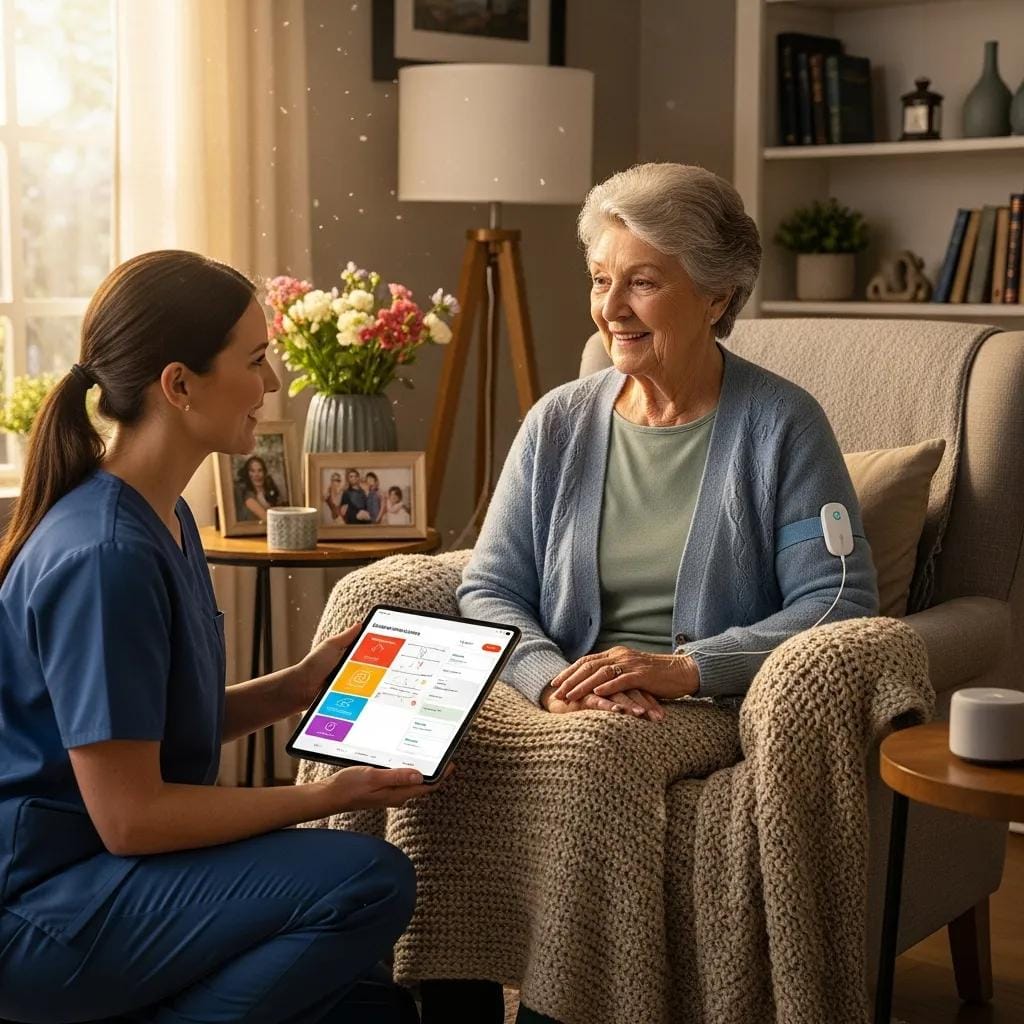
Several trends are powering growth: demographic shifts, a durable move toward home-based care, and higher consumer expectations for personalized, tech-enabled services. A larger senior population increases both the number of potential clients and the level of care many will need, boosting lifetime value for franchisees. Families increasingly choose in‑home care over institutional settings when appropriate, which raises demand for both non‑medical and medical home‑health franchised models focused on convenience and continuity. Technology—remote monitoring, electronic care plans, and telehealth—cuts inefficiencies and helps franchisors deliver consistent care across territories. These trends also open opportunities to specialize (for example, dementia care or post‑op recovery) and to use digital tools for client acquisition and retention.
Those market dynamics affect operational priorities such as training, staff scheduling, and partnerships with providers—topics we compare across franchise model types below.
How Senior Care Stands Up During Economic Downturns
Senior care demand is less cyclical because services are essential, tied to health, safety, and daily living, rather than discretionary spending. Families prioritize continuity of care, which often produces multi‑month or multi‑year engagements and steady income for franchisees. Diversifying across non‑medical home care, medical home health, and placement or referral services can help spread revenue and soften local market shocks. Operationally, predictable schedules, recurring billing, and long-term client relationships make workforce planning and cash‑flow forecasting easier. Common owner risk mitigations include building referral pipelines with healthcare partners, keeping a flexible staffing model, and offering tiered service packages to meet different budgets.
With resilience and revenue patterns in mind, the next section explains how franchise models differ operationally and financially.
What Are the Main Types of Senior Care Franchise Opportunities?
Senior care franchises typically fall into a few main types—primarily in‑home senior care and assisted living—along with subtypes such as non‑medical care and dementia‑specialty franchises. Each model varies by capital requirements, licensing, staffing mix, and target client profile; those differences shape the ideal investor and expected returns. In‑home care focuses on personal care and activities of daily living and generally requires flexible staffing and scheduling systems. Assisted living is facility‑based, with higher real estate and regulatory needs but potentially larger per‑resident revenue. Non‑medical franchises emphasize companionship and daily living support without clinical services, making them lower‑cost entry points for many owners.
Choosing between these options means comparing licensing constraints, service scope, and your operational capacity; the subsections below unpack the trade-offs between in-home and assisted living.
What Defines In-Home Senior Care Franchises?
In‑home senior care franchises deliver services inside a client’s residence—from companionship and personal care to medically supervised home‑health services in certain models. Their main appeal is lower fixed overhead and the ability to scale through trained caregiver networks and scheduling platforms, which reduces real‑estate needs. Operational priorities include recruiting dependable caregivers, efficient routing and scheduling, payroll compliance, and relationship building with hospitals and discharge planners. Client acquisition usually mixes digital marketing, local provider partnerships, and community outreach; retention depends on consistent caregiver‑client matches and measurable care quality. Because in‑home models are less capital-intensive than facility options, new owners often reach break‑even faster.
These operational realities contrast with assisted living, which adds real estate and facility management obligations—covered next.
How Assisted Living Franchise Models Differ
Assisted living franchises run licensed facilities that offer housing, meals, and varying levels of clinical and personal care. They differ in capital needs, regulatory oversight, and staffing complexity. The core dynamic is a facility-based revenue model that charges per resident and can capture room and board, ancillary services, and premium packages—often resulting in higher per‑unit lifetime revenue than in‑home care. But assisted living requires significant upfront investment in real estate or leasehold improvements, adherence to state licensing requirements, and more complex clinical staffing, including licensed nurses. Investors must weigh potentially higher returns against longer development timetables, local zoning and permitting hurdles, and the need for rigorous operational systems. Those trade-offs determine whether an investor should pursue an in‑home or a facility-based path.
Next, we’ll break down typical cost profiles so you can set realistic expectations before choosing a model.
Which Senior Care Franchise Brands Lead the Market in 2024?
Leading senior care franchisors are often identifiable by unit count, track record, quality of support, and signals of franchisee ROI. A curated shortlist should cover different niches and investment bands so you can focus on comparisons. When assessing brands, prioritize franchisors that publish clear training programs, provide field support, and offer technology and intake systems that minimize local administrative work. The table below summarizes representative brand types, typical investment bands, and core service focus to help you quickly compare options.
Here’s a concise comparison of representative leading brand types across the senior care space.
What Makes Leading In‑Home Care Franchises Stand Out?
Top in‑home care brands stand out by the depth of caregiver training, the strength of their scheduling and documentation systems, and partnerships with health systems for referrals. Competitive advantage often comes from a proprietary training curriculum, centralized intake, and marketing programs that produce steady referral pipelines. Ideal franchisees for this model are strong people managers who excel at local sales and quality control across a distributed caregiver team. These brands typically support new owners with recruiting playbooks, CRM tools, and marketing templates to shorten ramp‑up time. Evaluating those operational support elements is critical when comparing in‑home franchisors.
Those brand considerations shift for assisted living franchisors, who focus more on facility operations and licensing support.
Which Assisted Living Franchises Offer the Best Opportunities?
High‑opportunity assisted living franchises combine detailed operational playbooks, multi‑unit growth plans, and centralized help with licensing and staffing. Their advantage is hands‑on operations management—standardized clinical protocols, resident engagement programming, and revenue management—that drives occupancy and per‑resident revenue. Investors in assisted living usually have access to capital and a tolerance for longer development cycles, and they benefit from franchisors that assist with site selection, permitting, and staffing pipelines. When comparing franchisors, evaluate training depth, ongoing field support, and historical occupancy metrics to gauge ROI potential. Understanding those differences helps you decide whether an assisted living investment fits your objectives.
Next, we’ll cover cost elements and funding options to help you develop realistic financial plans.
How Much Does a Senior Care Franchise Cost and What Are the Investment Requirements?

The cost profile for a senior care franchise includes the franchise fee plus working capital, staffing, insurance, and—for facility models—real estate and build‑out. Franchise fees vary by model but are only part of the total initial investment: in‑home care typically falls in the $90,000–$150,000 range, while assisted living often requires seven‑figure capital. Ongoing expenses include royalties, contributions to the marketing fund, payroll, liability insurance, and compliance costs. Common funding mixes include SBA loans, franchisor financing when available, private investors, and personal capital—the right choice depends on collateral, creditworthiness, and franchisor programs. The table below breaks down common cost categories and what they cover to help you build a realistic pro forma.
Typical Franchise Fees and Ongoing Operational Costs
Franchise fees buy the right to operate under a brand and access initial training and systems; fees vary widely by model and brand strength. Beyond that, recurring royalties—usually a percentage of gross revenue—andcontributions to the marketing fund are ongoing obligations that affect monthly cash flow. Major operating costs include payroll (often the largest line), recruitment and retention expenses, insurance, and compliance fees tied to licensing and audits. Cost profiles vary: non‑medical home care generally has lower overhead and payroll needs, while assisted living requires full‑time clinical staff and facility maintenance budgets. Build conservative payroll and vacancy assumptions into your projections to stress‑test profitability.
Those cost realities determine which funding routes are practical—covered next.
What Funding Options Are Available for Senior Care Franchises?
Common financing routes include SBA 7(a) and 504 loans, franchisor financing programs, private equity or investor partners, and personal savings. SBA 7(a) loans are widely used for working capital and equipment, while 504 loans can finance real estate and major fixed assets—both require documentation and credit checks. Some franchisors offer direct or preferred‑lender financing for qualified candidates. Alternative solutions, such as revenue‑based financing or investor partnerships, may be suitable for high‑capital assisted living projects. Compare options by term length, collateral needs, and deployment speed, since time‑to‑open affects how much working capital you’ll need.
With costs and funding in mind, a structured selection process helps you choose the best franchise match for your goals.
How to Choose the Best Senior Care Franchise for Your Goals
Choosing the right senior care franchise benefits from a repeatable decision framework that weighs your financial readiness, operational preferences, risk tolerance, and cultural fit with the franchisor. A scoring model—weighting factors such as investment fit, training depth, ongoing fees, territory potential, and franchisee satisfaction—helps produce objective comparisons. A prioritized due diligence checklist surfaces red flags in FDDs, operations manuals, and franchisee interviews. Below are practical steps to narrow options and run comparative due diligence.
- Assess your financial readiness: Confirm available capital, likely loan eligibility, and contingency reserves before shortlisting.
- Score franchisor support: Review onboarding, training, technology, and field assistance using targeted FDD questions.
- Verify territory and growth potential: Clarify protected territories, market penetration, and multi‑unit incentives.
- Review legal and financial disclosures: Look closely at FDD Item 19 (financial performance) and, when available, Item 7 (estimated initial investment).
- Speak to multiple franchisees: Conduct focused interviews to validate day‑to‑day realities and responsiveness of franchisor support.
Following a repeatable process helps you compare franchisors both quantitatively and qualitatively. The table below restates the selection criteria, why each matters, and example red flags to watch for during conversations and document review.
Adding advisory help at this stage can speed evaluation and improve decision quality. Business Builders helps entrepreneurs evaluate fit and connect with appropriate franchises, offering focused guidance during this high‑intent phase.
Key Questions to Ask Franchisors
Sharp, FDD‑focused questions reveal the operational realities behind marketing materials and expose contractual or financial risks. Ask about the scope of support, renewal and termination terms, actual earnings claims, training timelines, territory definitions, and typical working‑capital burn during ramp‑up. Test franchisor responsiveness: how quickly they provide sample contracts, whether they share reference contacts, and what ongoing reporting they require. Focus on questions that validate assumptions in your financial model and clearly delineate franchisor versus franchisee responsibilities. Track answers in a standardized spreadsheet to make cross‑franchisor comparisons simple and objective.
Why Training, Support, and Brand Reputation Matter
Training, ongoing support, and brand reputation are strong predictors of franchisee success because they shorten learning curves and improve customer acquisition and retention. Effective onboarding mixes classroom and field training, detailed operations manuals, and scheduled field visits—mechanisms that translate franchisor expertise into consistent local execution. Reputation signals to check include franchisee turnover, online reviews, and independent performance data—strong reputations usually translate into higher referral rates and easier sales conversations. Use a simple rubric to score onboarding, technology, marketing help, and field support frequency. Franchisors with high scores tend to deliver better early‑year results for new owners.
Once you’ve evaluated these qualitative signals, you’ll be ready to request and analyze the FDD and financial projections. The next section explains how Business Builders helps streamline that exploration while remaining impartial.
How Business Builders Helps Navigate Senior Care Franchise Opportunities
Business Builders provides advisory services that simplify franchise exploration without pressure, helping entrepreneurs match capital, background, and long‑term goals to suitable senior care franchisors. The core of the service is a guided discovery process that clarifies financial expectations and background requirements and then matches candidates to high‑quality franchise opportunities. Advisors emphasize education—explaining fee structures, operational demands, and regulatory issues—so prospective owners can make informed choices. Business Builders also connects candidates with financing referrals and due diligence tools that shorten the research timeline and reduce uncertainty.
- Clear, pressure‑free guidance: Exploratory conversations and structured qualification that respect your timeline.
- Thorough financial and background review: Advisors help build realistic pro forma financial statements and recommend appropriate investment bands.
- Connections to critical resources: Introductions to lenders and service providers streamline preparation.
- A community of peers: Access to fellow owners and educational content that shortens learning curves for new franchisees.
These services are designed to complement—not replace—your independent due diligence and legal review. The following subsections explain our matching process and the client resources available.
How Business Builders Connects Entrepreneurs with Top Senior Care Franchises
Business Builders follows a stepwise matching process that starts with discovery, moves through qualification, and ends with introductions to franchisors—each stage has clear timelines and touchpoints. Typical steps include an initial consultation to clarify goals and capital, a financial and background qualification review, a curated shortlist of franchisors that meet those parameters, and facilitated introductions to franchisor representatives. Advisors provide FDD review checklists and suggested interview questions for existing franchisees, accelerating due diligence. This structured approach reduces wasted outreach and helps entrepreneurs focus on franchises aligned with their readiness and objectives.
That connector role is backed by practical resources and peer networks that support decision‑making.
Resources and Community Support from Business Builders
Business Builders provides educational content, community access, and hands‑on advisory guidance to help entrepreneurs evaluate senior care franchises and plan next steps. Resources include FDD checklists, financial projection templates, and curated lists of financing and professional referrals—tools that demystify early steps and prepare candidates for franchise conversations. The community connects aspiring owners with peers and mentors for candid feedback, while advisors help interpret franchise disclosures and compare offer terms. That mix of tools and human help reduces the risk of misaligned investments and speeds better decision‑making.
Business Builders connects first‑time and experienced entrepreneurs with top‑performing franchises and business opportunities. Our advisory focus is education and alignment—helping candidates match financial readiness, background, and long‑term goals to the right senior care franchise. Core benefits include pressure‑free guidance, thorough financial and background review, curated resource connections, and a supportive peer community.
Use this summary to move your shortlist toward action and prepare to request disclosure documents and formal offers from franchisors.
Frequently Asked Questions
What qualifications do I need to start a senior care franchise?
Qualifications vary by franchisor, but most require sufficient capital for the initial investment and ongoing operations, a clean background check, and a readiness to manage a service business. Experience in management, healthcare, or customer service is helpful but not required—strong people skills and a commitment to quality care go a long way. Some franchises also require or provide role‑specific training to meet regulatory or clinical standards.
How can I assess the demand for senior care services in my area?
Start with local demographics—use census data and local health statistics to examine the population aged 65+. Supplement that with conversations with hospitals, discharge planners, senior centers, and healthcare providers to spot service gaps. Local surveys and online search trends can reveal demand patterns. Combining quantitative data and local provider insights gives a realistic picture of market size and service needs.
What are the common challenges faced by senior care franchise owners?
Common challenges include recruiting and retaining caregivers, ensuring regulatory compliance, and maintaining consistent service quality. Caregiver turnover is an industry-wide issue, and regulatory requirements can vary widely by state. Proactive hiring and training programs, robust compliance systems, and strong local referral relationships help mitigate these risks and improve operational stability.
What role does technology play in senior care franchises?
Technology is central to efficient operations: electronic care plans, scheduling and payroll systems, telehealth, and remote monitoring all reduce administrative burden and improve care coordination. A good technology stack increases caregiver productivity, strengthens documentation for compliance, and makes it easier to scale consistent services across territories.
How can I ensure compliance with state regulations in senior care?
Stay informed on state licensing rules, staffing ratios, training requirements, and health and safety standards. Regularly review state health department guidance, join industry associations for updates, and implement internal audits and training programs. Many franchisors offer compliance support and templates, and consulting with legal or compliance specialists is often wise—especially for facility‑based models.
What are the benefits of joining a franchise network in senior care?
Joining a franchise gives you established brand recognition, proven operational systems, and structured training—advantages that reduce startup risk. Franchise networks also offer marketing support, technology platforms, and a community of owners for shared best practices. That collective knowledge and infrastructure can significantly shorten your learning curve and increase the chance of early success.
What financing options are available for starting a senior care franchise?
Financing options include traditional bank loans, SBA 7(a) and 504 loans, franchisor financing programs, private investors, and personal savings. SBA loans are common because of favorable terms and lower down payments; franchisors sometimes have lender relationships or limited financing options for qualified candidates. For higher‑capital assisted living projects, investor partnerships or project finance structures may be appropriate. Evaluate each option in terms of collateral requirements and funding speed.
Conclusion
Investing in a senior care franchise is a way to enter a growing, mission‑driven market backed by demographic tailwinds and recurring revenue. By understanding the different franchise models, the true cost of entry, and the support you’ll need to operate successfully, you can make choices that align with both your financial goals and personal values. Take the next step by using the resources here, building a short list, and connecting with reputable franchisors and advisors to move from research to action. Start your path in the senior care industry with a clear plan and the right support.