
Top-Rated Pet Owner Franchises You Can Start Today
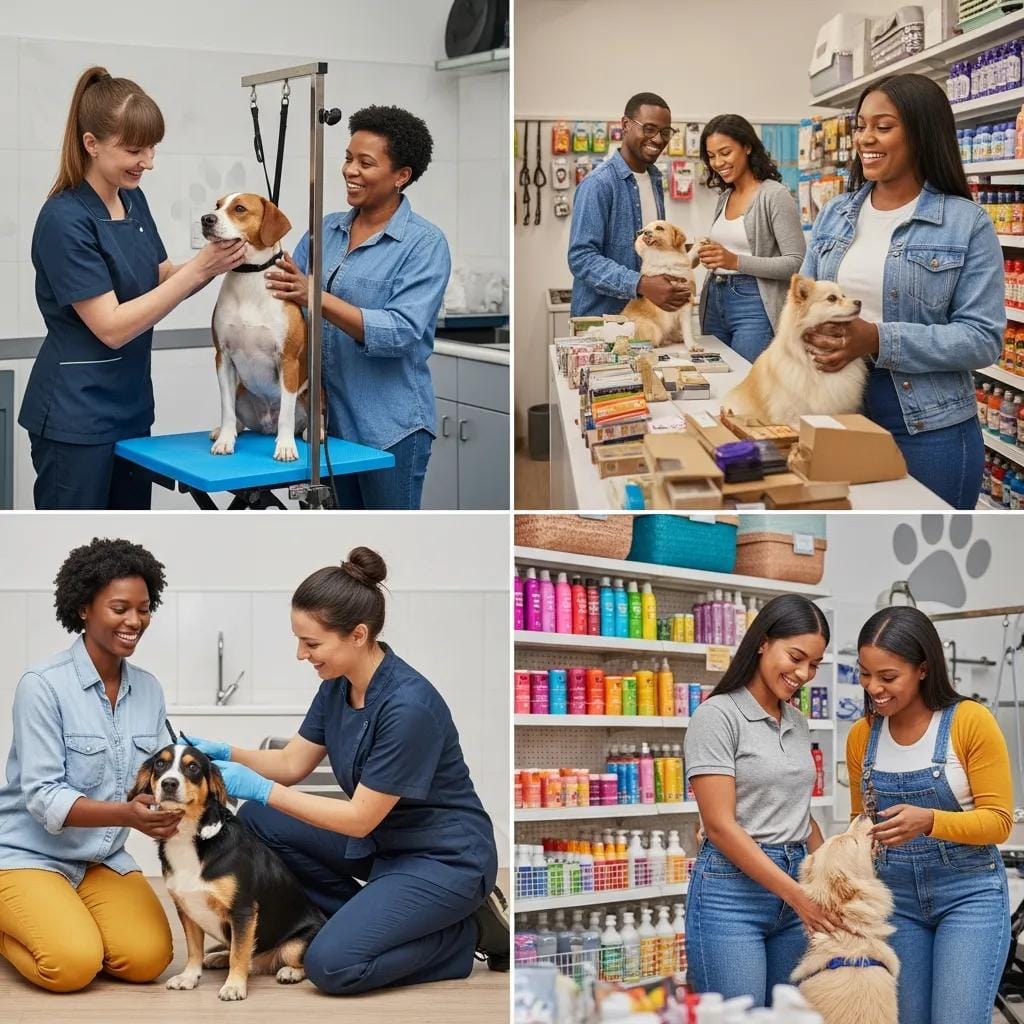
Best Pet-Based Franchises: Your Guide to Profitable Business ModelsBest Pet-Based Franchises: Your Practical Guide to Profitable Pet Business Ownership
“Pet-based franchises” describe businesses built around pet care, retail, and services that capture growing consumer spending on companion animals. This guide explains why franchise opportunities—from grooming and mobile services to dog daycare, retail, and training—appeal to entrepreneurs seeking repeatable, community-focused businesses. You’ll find clear comparisons of business models, realistic startup cost ranges, and step-by-step decision criteria tuned for 2024–2025 market conditions. Read on for the leading grooming formats, typical daycare investment ranges, retail trade-offs, training revenue levers, financing options, and a practical checklist for choosing the right franchise. We also use common search phrases—pet franchise opportunities, dog daycare franchise, pet grooming franchise, pet franchise cost—to help you evaluate options and build a focused plan for profitable ownership. Expect side-by-side tables, operational checklists, and decision rules that turn market signals into actionable next steps.
What Are the Top Pet Grooming Franchise Opportunities in 2025?
Grooming franchises typically fall into two core formats: salon-based shops that depend on walk-ins and appointments, and mobile grooming units that bring services to customers’ homes. Salons need more fixtures, inventory, and retail space—and benefit from steady foot traffic and in-store upsells. Mobile models reduce lease risk and scale by adding vans and managing territories. Both formats generate predictable revenue through recurring appointments, subscription grooming plans, and bundled add-ons—such as nail trims, wellness treatments, and similar services — that increase average ticket size. Understanding these operational differences helps you match capital, staffing preferences, and local demand.
Below are representative grooming formats with quick pros and cons to help you compare before reviewing the cost table.
- Salon-based grooming franchises build a steady walk-in customer base and rely on retail upsells to increase per-visit revenue.
- Mobile pet grooming franchises lower fixed overhead and scale by adding vans to capture suburban, recurring clients.
- Boutique or luxury grooming concepts command premium pricing but need a stronger location strategy and more marketing investment.
- Hybrid models pair a compact salon footprint with mobile vans to balance fixed costs and reach.
This side-by-side view shows how format choice affects staffing needs, seasonality exposure, and growth levers for franchisees. For entrepreneurs who want hands-on matchmaking and evaluation while exploring grooming concepts, Business Builders serves as a franchise brokerage, connecting aspiring and experienced owners with vetted opportunities. They provide personalized matching, consulting to assess financial and background requirements, access to a platform of franchise options, and a community for learning and support. Based in Tampa, Florida, Business Builders can turn format differences into a tailored shortlist aligned with your budget and goals.
How Do Mobile Pet Grooming Franchises Operate and Grow?
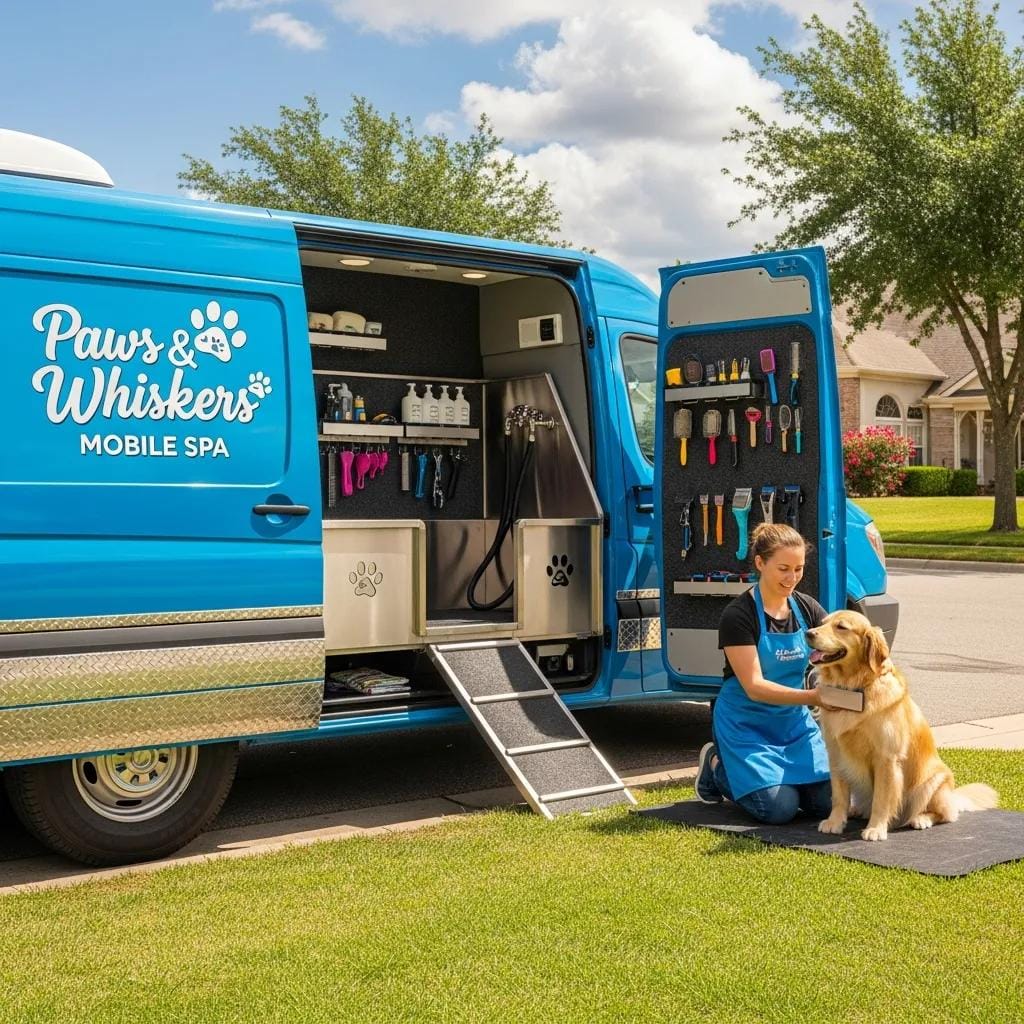
Mobile grooming franchises operate from purpose-built vans or trailers fitted with tubs, grooming tables, electrical systems, and water-handling equipment to comply with safety and environmental regulations. Success depends on efficient appointment routing, reliable scheduling software, and territory planning that minimizes drive time and maximizes bookings—each van’s utilization directly drives revenue. Growth usually follows a multi-van path: trained groomers run additional vehicles under centralized booking and protected territories to maintain service consistency. When evaluating a mobile franchise, check van fit-out specs, recommended appointment volumes, software integrations, and franchisor guidance for multi-unit growth.
Checklist for evaluating a mobile grooming franchise:
- Confirm the vehicle equipment list includes secure bathing stations and compliant water-handling systems.
- Verify scheduling tools and territory protections to preserve routes as you add vans.
- Ensure initial training covers grooming techniques, mobile operations, and route management.
These operational details determine whether mobile grooming fits your lifestyle and growth goals—and they provide realistic revenue-per-van assumptions for financial modeling.
What Are the Investment Ranges for Leading Pet Grooming Franchises?
Startup costs vary by format: basic mobile setups are often much cheaper than complete salon build-outs, while premium salons require larger lease and build-out budgets. Key cost components include the franchise fee, vehicle or facility build-out, grooming equipment, and FFE (furniture, fixtures, equipment), initial inventory, and working capital to cover payroll and operating expenses during ramp-up. Recurring fees—royalties and advertising fund contributions — should be included in your pro forma to affect cash flow.
| Franchise Format | Typical Initial Investment Range | Unique Support / Differentiator |
|---|---|---|
| Salon-style concept | $150,000 – $350,000 | Onsite training and local marketing templates |
| Mobile grooming model | $60,000 – $200,000 | Van outfitting guidance and routing software |
| Boutique/luxury salon | $250,000 – $500,000 | Premium branding and higher-ticket service menu |
Use this table to compare capital needs by format and see what franchisor support typically offsets startup risk. Run sensitivity analyses for occupancy, average ticket, and staffing to estimate how quickly a grooming franchise can reach breakeven.
How Much Does It Cost to Start a Dog Daycare Franchise?
Dog daycare startups usually need funding to lease or purchase a facility, build and purchase indoor and outdoor play areas, install enclosures, install flooring, install HVAC upgrades, install secure ingress/egress, install signage, and install leaning/enrichment equipment. You’ll also need working capital for staffing, insurance, licensing, and marketing during ramp-up. Regulations and insurance requirements for animal care vary by location. They can materially affect pre-opening costs and operating procedures—so factor in consultant fees and permit timelines when planning your launch.
Typical cost elements for a dog daycare startup include build-out, FFE, franchise fee, pre-opening payroll, insurance, and working capital.
| Cost Element | Typical Low-End Value | Typical High-End Value |
|---|---|---|
| Build-out and facility upgrades | $50,000 | $200,000 |
| Furniture, fixtures & equipment (FFE) | $10,000 | $60,000 |
| Franchise fee and initial royalties | $10,000 | $60,000 |
| Working capital and pre-opening payroll | $15,000 | $75,000 |
That range shows how investments can vary from modest regional openings to premium, multi-zone daycares. Get local permitting and insurance quotes before finalizing your funding plan. The following section explains the recurring revenue and community advantages that make daycare an attractive business model.
What Are the Benefits of Owning a Dog Daycare Franchise?

Dog daycare franchises generate predictable, recurring revenue through membership plans, multi-day packages, and add-ons such as grooming and training. Retention tends to be strong when facilities offer consistent care, clear safety protocols, and easy booking—boosting lifetime customer value. Daycares also create cross-sell opportunities—retail, training packages, and boarding can meaningfully increase average revenue per pet. Owners benefit from local referral networks and seasonal demand spikes tied to travel and holidays.
- Recurring membership revenue stabilizes monthly cash flow.
- Strong referral potential from local pet-owner communities.
- Cross-selling grooming, retail, and training increases per-customer revenue.
These operational strengths support many daycare franchise financial models and explain why investors often favor the subscription-like income profile.
Which Dog Daycare Franchises Offer the Best Support and Training?
Top franchisors provide thorough initial training that covers animal handling, safety protocols, staff scheduling, and facility maintenance. Ongoing support typically includes marketing templates, SOPs for cleaning and playgroup management, and access to centralized purchasing for supplies and retail items. Territory rights and a transparent multi-unit development path matter for owners who plan to scale. When evaluating a franchisor, request training timelines, examples of field support, and sample marketing campaigns that drove enrollment.
- Request a detailed training syllabus and examples of onsite support visits.
- Confirm marketing deliverables, including digital lead-generation tools and local-store marketing guidance.
- Verify territory definitions and whether multi-unit discounts or development incentives are in place.
These checks reveal which franchises reduce operational risk and speed breakeven through structured support.
What Are the Best Pet Supply Store Franchises to Consider?
Pet supply franchises range from small boutique shops focused on curated premium SKUs to larger hybrid retailers that combine storefronts with e-commerce fulfillment. Capital requirements vary: boutiques need less lease space and inventory but depend on careful product selection and local marketing; bigger retail footprints carry higher overhead and inventory costs. The right model depends on regional demand, your ability to manage inventory and supplier terms, and whether you’ll add online subscriptions or curbside pickup for omnichannel revenue.
Inventory management and supplier relationships are central to retail performance, and omnichannel capabilities—such as subscriptions and auto-replenishment—can significantly boost customer retention.
| Franchise Model | Business Model Type (brick-and-mortar / hybrid / online) | Typical Monthly Overheads |
|---|---|---|
| Boutique specialty | Brick-and-mortar | $8,000 – $15,000 |
| Hybrid retail + e-comm | Hybrid | $12,000 – $30,000 |
| Online-first subscription | Online | $5,000 – $12,000 |
This table highlights how model choice affects monthly overhead and operational complexity. The following section contrasts trade-offs and their impact on margins and staffing.
How Do Pet Supply Store Franchises Differ in Business Models?
Brick-and-mortar shops depend on merchandising, floor staff, and local marketing—earning margin on in-store sales and services like grooming referrals. Hybrid models add an e-commerce layer, requiring inventory systems, fulfillment processes, and click-and-collect logistics. Online-first brands reduce physical overhead but must invest heavily in digital acquisition, subscription management, and efficient shipping to protect margins. Each model places different demands on working capital, supplier negotiation, and customer service infrastructure.
Key operational differences include inventory turnover, SKU breadth, and staffing intensity—factors that together determine gross margins and supply-chain sensitivity.
What Are the Market Trends Driving Pet Retail Franchise Growth?
Growth in 2024–2025 is driven by pet humanization, premiumization of food and wellness items, and subscription delivery models that lock in recurring revenue. E-commerce and omnichannel fulfillment are essential for convenience and differentiation, while private-label SKUs can improve margins. Sustainability and health-focused products are also rising categories that reflect consumer preferences.
- Pet humanization increases demand for premium and specialty products.
- Subscription and recurring delivery models provide predictable revenue streams.
- Omnichannel retail and digital convenience are required to hold market share.
Understanding these trends helps franchisees prioritize inventory, marketing, and loyalty programs to capture higher-margin customer segments.
How Can You Succeed with a Dog Training Franchise Business?
Dog training franchises include in-home trainers, group-class studios, behavior-specialty clinics, and virtual platforms—each with different scalability and credentialing needs. Revenue usually comes from private sessions, group classes, board-and-train intensives, and digital course subscriptions. Success depends on the quality of the trainer, progressive lesson plans that encourage repeat business, and transparent pricing that communicates value. Franchisors that provide training curricula, certification paths, and client management systems shorten the path to consistent utilization.
What Types of Dog Training Franchises Are Available?
Standard formats include in-home training (highly personalized but capacity-limited per trainer), class-based studios that scale via scheduled sessions, virtual training that reduces travel and scales through digital products, and board-and-train programs that command premium prices for intensive behavior work. Each model requires specific credentialing and insurance, and mixed strategies—combining private sessions with group classes—often produce the most stable revenue. Scalability depends on recruiting and certifying trainers and on standardizing the curriculum and client progress tracking.
Choose the model that matches local demand, your ability to hire qualified trainers, and whether you prioritize high-ticket services or volume-based classes.
What Are the Key Factors for Success in Dog Training Franchises?
Trainer quality and a consistent methodology are the biggest drivers of retention and referrals. Transparent pricing, measurable progress tracking, and structured follow-up increase lifetime client value and referral conversion. Marketing should highlight trainer credentials, success stories, and clear outcomes, and leverage partnerships with vets and local pet businesses. Track KPIs such as retention rate, average session revenue, referral rate, and trainer utilization.
- Maintain rigorous trainer certification and ongoing education.
- Use measurable client progress reports to demonstrate results.
- Build referral partnerships with veterinarians and local pet businesses.
These elements build a reputation for consistent results and support sustainable growth.
What Are the Emerging Trends in Pet Franchise Investments?
Emerging trends for 2024–2025 center on mobile services, subscription offerings, technology-enabled scheduling and CRM, and multi-unit expansion by experienced franchisees. Financing innovations—such as franchisor programs and equipment leasing—make higher-capital models more accessible. Technology—online booking, automated reminders, and client portals—improves utilization and retention, turning operational efficiency into a competitive edge. Franchisees who combine strong local execution with scalable systems and recurring revenue models are positioned to outperform peers.
Business Builders operates as a franchise brokerage that helps entrepreneurs discover and evaluate top franchise opportunities. They offer personalized matching, consulting, financial, assistancebackground screening, and introductions to franchisors. For many owners, working with a broker speeds discovery of financing paths and multi-unit strategies while preserving bandwidth for due diligence.
How Is the Pet Care Industry Growing and What Does It Mean for Franchisees?
Market data shows steady growth in pet services and specialty retail as owners spend more per pet and adopt more services. For franchisees, that means expanded premium service opportunities, stronger pricing power for differentiated offerings, and the need to test service bundles locally to find high-margin categories. Fast-growing segments include mobile grooming and subscription wellness products—piloting a small area with targeted marketing can validate demand before scaling. Monitor local competitors and tailor services to unmet neighborhood needs.
Practical testing steps include running limited-time promotions, tracking repeat-booking rates, and surveying local pet owners to refine your service menu.
What Financing Options Are Available for Pet Franchise Owners? Standard financing options include SBA loans for owner-occupied businesses, conventional bank loans, franchisor financing, equipment leasing, and private investors or partners. Each has trade-offs: SBA loans offer longer terms but require documentation and credit standards; franchisor financing may lower upfront fees but include stricter terms; equipment leasing preserves working capital for inventory and marketing; private investors reduce personal capital needs but share upside. Align financing timing with permit and build-out milestones to secure runway through ramp-up.
When to use which option:
- Choose SBA or bank loans for owner-operator applicants seeking long-term fixed rates and who meet credit requirements.
- Consider franchisor financing for partial fee coverage or early leverage when terms are transparent.
- Use equipment leasing to avoid heavy upfront purchases and preserve working capital.
These strategies help you create a realistic capital plan based on the franchise model you select.
How Do You Choose the Right Pet Franchise for Your Goals?
Choosing the right pet franchise means balancing personal passion, available capital, operational skills, and local market demand. Start by clarifying your role—owner-operator or passive investor—how much capital you can commit or finance, and the strengths you bring to hiring and customer service. Evaluate franchisor support, Franchise Disclosure Document (FDD) items, royalty schedules, and territory protections to assess the likely path to profitability. Use a structured decision process to limit emotional bias and focus on measurable fit criteria.
Below is a stepwise checklist to guide your selection and serve as a featured-snippet-ready decision matrix.
- Define your preferred ownership role and time commitment.
- Set clear capital limits, including liquid capital and acceptable financing routes.
- Screen franchisors for training, marketing support, and territory protection.
- Run a local market feasibility check for demand, competition, and pricing.
- Review FDD items related to fees, claims, and franchisor financial health.
Use this checklist to narrow to 3–5 franchises for deeper diligence, then validate assumptions with market testing and franchisor conversations. If you want guided matching, Business Builders can help—offering intake, curated matches based on your capital and preferences, franchisor introductions, and support reviewing FDD disclosures. They’re set up to accelerate discovery and surface candidates that meet your constraints.
What Financial and Background Requirements Should You Consider?
Franchisors usually publish net worth and liquid capital thresholds so franchisees can cover startup costs and early operating losses. Thresholds vary by concept but commonly require demonstrable liquidity for working capital and contingencies. Relevant experience—retail management, pet care, or service operations—can reduce approval friction. If you don’t meet the stated requirements, consider partnering with investors, using equipment leasing to minimize upfront cash requirements, or starting with a smaller-format concept to gain experience.
| Requirement | Typical Threshold | Alternative Route |
|---|---|---|
| Liquid capital | $25,000 – $150,000 | Partnering or leasing |
| Net worth | $100,000 – $500,000 | Investor equity or loan support |
| Relevant experience | Management or pet-care background preferred | Hire an experienced manager or complete franchisor training |
These benchmarks help you assess readiness and decide which financing or partnership structures to pursue before applying.
How Does Business Builders Support Entrepreneurs in Selecting Pet Franchises?
Business Builders is a franchise brokerage that helps entrepreneurs connect with high-quality franchise and business opportunities. Their services typically include an initial intake to clarify goals, curated matches based on capital and preferences, introductions to franchisors, and assistance in understanding key FDD disclosures. Working with a broker can shorten the discovery process, surface financing alternatives, and give you sharper questions during due diligence.
Expect a structured process when engaging a broker: intake → curated shortlist → franchisor introductions → due diligence support → financing referrals. That sequence reduces time spent on mismatched leads and focuses on fit and realistic financial modeling.
Frequently Asked Questions
What are the key considerations when choosing a pet franchise?
Consider your passion for pets, available capital, and your operational skill set. Decide whether you’ll run daily operations or act as a passive investor. Review franchisor support—training, marketing, and field assistance—and study the FDD for obligations and fees. Complete a local feasibility study to gauge demand and competition. A structured approach helps you pick a franchise aligned with your goals and market conditions.
How can I finance my pet franchise startup?
Financing commonly comes from SBA loans, conventional bank loans, franchisor financing, equipment leasing, or private investors. SBA loans offer long terms but require documentation; franchisor financing can reduce upfront needs but may carry different terms; leasing conserves capital for inventory and marketing; investor partners cut your personal capital requirement but share ownership. Match each option’s timing and terms to your launch milestones.
What are the operational challenges of running a pet grooming franchise?
Key challenges include hiring and retaining skilled groomers, maintaining equipment, and delivering consistently high-quality service. Grooming spaces must stay clean and safe to meet regulations and customer expectations. Efficient scheduling and transparent customer communication are critical during peak seasons. Strong SOPs and ongoing staff training mitigate many operational risks.
What marketing strategies are effective for pet franchises?
Effective tactics include social media storytelling, local partnerships, and community events. A strong online presence backed by customer testimonials attracts new clients. Partner with veterinarians, pet stores, and shelters to boost visibility. Promotions, loyalty programs, and referral incentives drive repeat business—while local-focused campaigns highlighting your unique services help you stand out.
How do pet daycare franchises ensure safety and compliance?
Safety and compliance rest on facility design, secure fencing, and well-planned play areas. Staff training in animal behavior, emergency procedures, and first aid is essential. Regular inspections and maintenance reduce accidents, and transparent communication with pet owners about protocols builds trust and repeat business.
What are the benefits of joining a franchise versus starting an independent pet business?
Franchises offer brand recognition, proven systems, and access to training and ongoing support—reducing the learning curve for new owners. Franchisors provide marketing tools, operational playbooks, and collective purchasing power that can lower supply costs. That networked support often increases the odds of building a successful, profitable business compared with starting independently.
What trends are shaping the future of pet franchises?
Expect growth in mobile services, subscription models, and health-and-wellness products. Pet humanization continues to drive demand for premium options, while technologies such as online booking and client portals boost operational efficiency. Sustainability and eco-friendly products are also gaining traction. Franchisees who adapt to these trends and innovate their offerings will be well-positioned for growth.
Conclusion
Investing in a pet-based franchise lets you tap a growing market shaped by pet humanization and premium services. With multiple formats—from grooming to daycare and retail—you can find a model that matches your skills and financial goals. Partnering with an established franchisor or working with a broker gives you the support to navigate startup and operations more smoothly. If you’re ready to explore options, start with a focused shortlist, run local tests, and reach out to franchisors or a broker to speed up your discovery process.