
Brokers vs. AI: How to Find the Right Franchise for You

Why a Franchise Broker Beats AI and Google for Confident OwnershipAI vs Google vs Franchise Brokers: How to Find the Franchise That Fits You
Finding the right franchise can feel overwhelming. Between AI-driven matching tools, broad Google searches, and working with franchise brokers, it helps to know what each route actually does well — and where it falls short. Below, we compare the three approaches so you can choose the one that aligns with your priorities, timeline, and risk tolerance. You’ll learn how AI speeds up discovery, how to use Google smartly, what brokers bring to the table, and how blending methods often produce the best results.
How Does AI Improve Franchise Matching and Research?
AI-powered platforms sort and analyze large sets of franchise data to surface options that fit your stated preferences and market signals. Rather than scrolling endlessly, AI gives you a curated starting list based on patterns in the market and your inputs. That can save time, narrow choices, and reveal fits you might otherwise miss — while still requiring human review before you commit.
What Are the Benefits of AI-Powered Franchise Matching Tools?
AI franchise-match tools deliver clear, practical advantages:
- Speed and Scale: AI scans many opportunities fast, so you get usable results without weeks of manual hunting.
- Personalized Suggestions: By using your preferences (budget, location, experience), AI narrows options to what’s realistic for you.
- Actionable Market Insights: Algorithms can flag trends and comparative metrics that help you evaluate potential franchises more objectively.
Used as a first-pass filter, AI makes the search more efficient and gives you a focused set of candidates to investigate further.
What Limitations and Biases Should You Consider with AI in Franchise Selection?
AI is a valuable tool, but it has limits you should account for:
- Data Bias: Recommendations depend on the data fed to the system — if that data is skewed, so are the results.
- Missing Human Context: AI can’t capture subtle fit factors like rapport with franchisors or local reputation the way conversations with people can.
- Opaque Logic: Some platforms don’t make their scoring transparent, so you may not know why a franchise was suggested.
Think of AI as an intelligent assistant: great at surfacing options quickly, but not a replacement for direct research and judgment.
What Are Effective Google Search Strategies for Finding Franchise Opportunities?
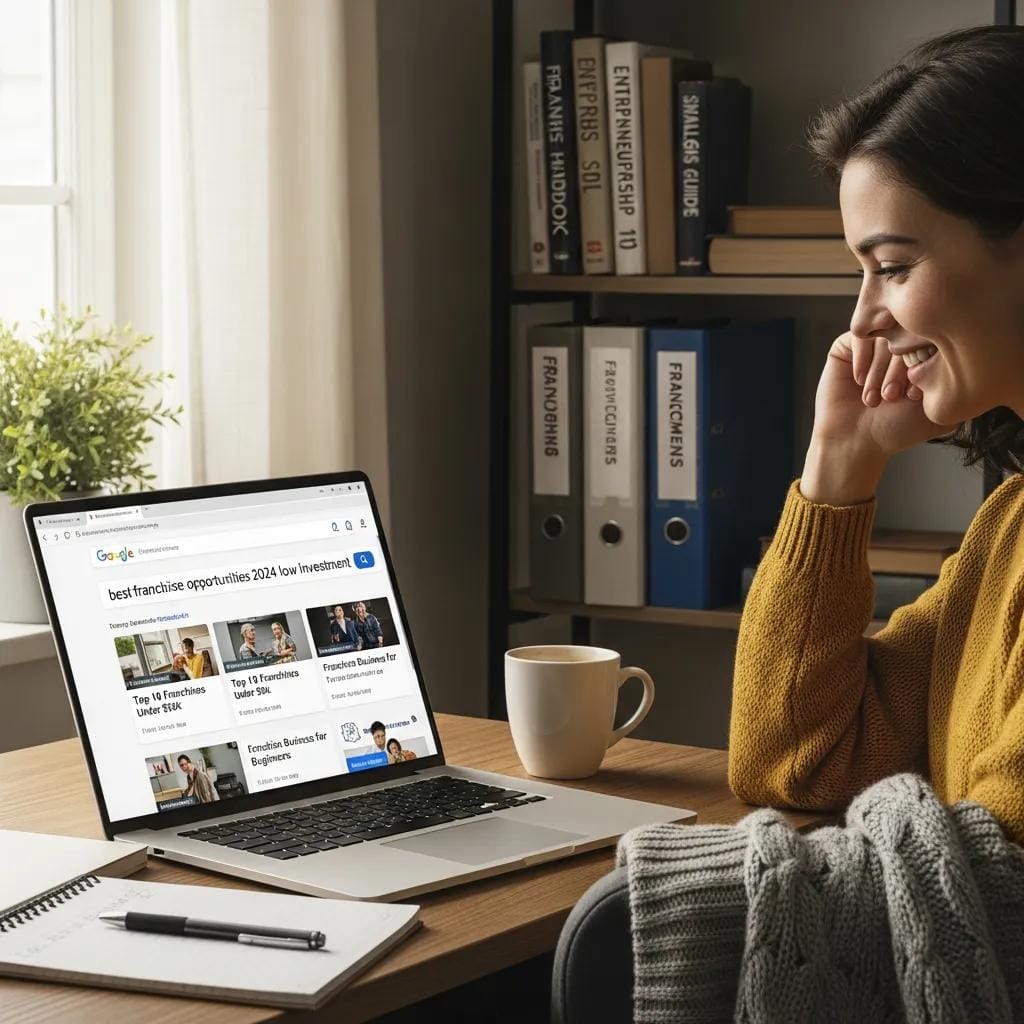
Google is a powerful, free research tool when used with intent. With targeted queries and local filters, you can uncover franchisor sites, news, franchise directories, and franchisee reviews. Combine keyword tactics with local SEO awareness to find realistic opportunities in your area.
Research also showsthat strong SEO efforts can materially boost visibility and sales for franchise businesses, making innovative search practices important for both discovery and brand assessment.
SEO Impact on Franchise Visibility and Sales
This analysis reviews how search engine optimization affected regional sales and performance in the Sushiset case study. It documents improvements after targeted SEO work — including keyword research, on-page and off-page optimization, content creation, technical fixes, and local SEO — and argues that these efforts drove a 40% revenue increase, an 80% rise in profit, and a 40% drop in customer acquisition costs. The study underscores SEO’s measurable role in growth and marketing efficiency.
ALGORITHMS FOR INCREASING REGIONAL SALES THROUGH SEARCH ENGINE PROMOTION: FINANCIAL ASSESSMENT AND PRACTICAL RESULTS, 2024
How Can You Use Advanced Google Search Operators to Discover Franchises?
Advanced operators sharpen results and cut noise. Try these techniques:
- Use Quotation Marks: Search “franchise opportunities” to find pages with that exact phrase.
- Target Specific Sites: Use site:franchise.com to pull results from a particular domain.
- Exclude Terms: Add a minus sign — for example, “franchise -restaurant” — to remove unwanted categories.
These approaches help you focus on relevant listings, disclosures, and news rather than broad, generic results.
How Do Google AI Overviews and Local SEO Help in Franchise Research?
Google’s AI summaries and local search features speed up initial screening and make it easier to find nearby opportunities:
- AI Summaries: Quick overviews highlight the essentials so you can decide which links deserve deeper reading.
- Local SEO Matters: A franchisor’s local visibility often signals marketing competence and demand in your area.
- Optimize Your Searches: Use city or region keywords and check map results to confirm real-world availability.
Together, these tools let you move from discovery to shortlisting faster while spotting potential red flags in public information.
What Are the Pros and Cons of Using Franchise Brokers?
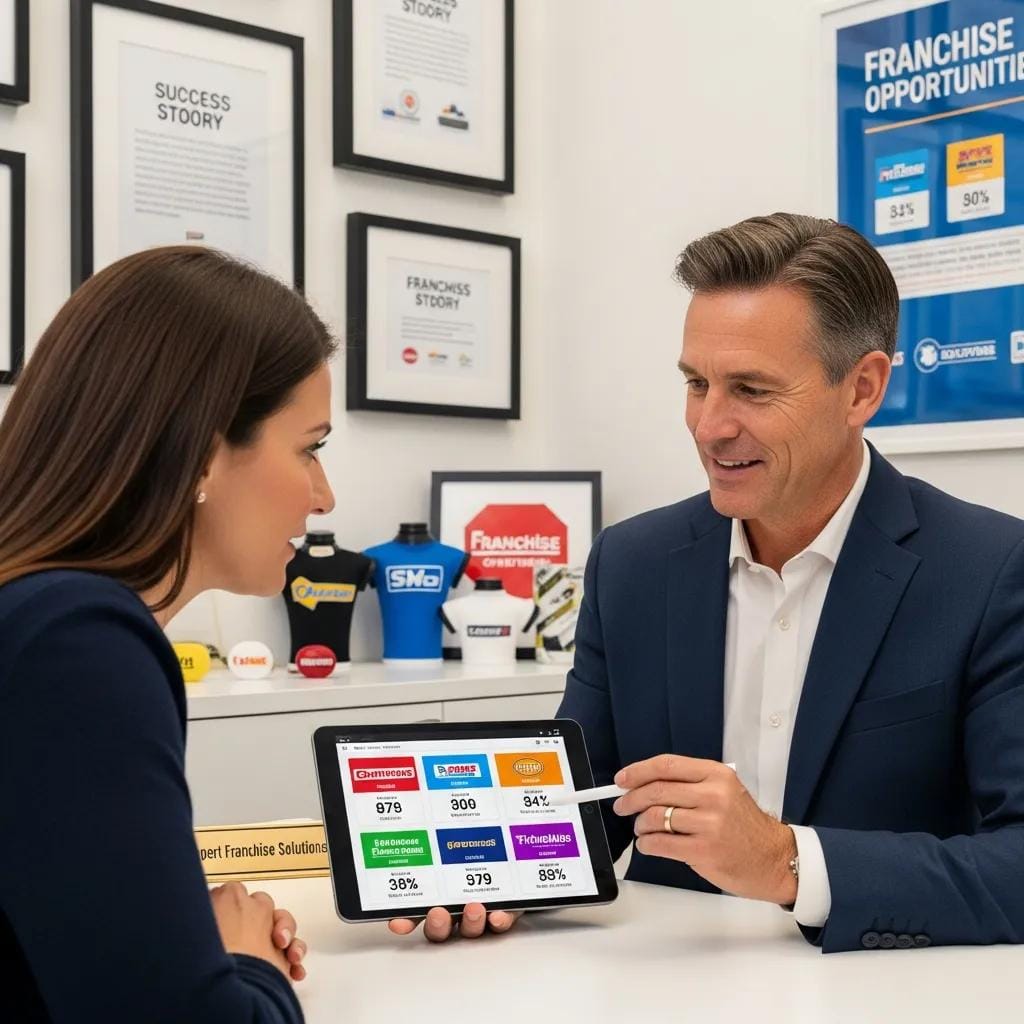
Franchise brokers bring hands-on experience and relationships that can streamline your search and open doors. But like any advisor, they come with trade-offs. Below are the most valuable services they offer and the conflicts to watch for.
How Do Franchise Brokers Assist Aspiring Entrepreneurs?
Crucially, for aspiring entrepreneurs, the invaluable guidance of a franchise broker comes at no direct cost to you. Brokers are compensated by the franchise brands themselves, not by the buyer. This means you gain access to expert market knowledge, personalized matching, and negotiation support — services that could prevent a six-figure mistake — absolutely free. Given the stakes of a major investment, leveraging a professional expert at zero cost to you is, quite simply, a no-brainer.
Unlike the one-time queries you type into Google or the static preferences you feed an AI tool, working with a franchise broker is fundamentally different: it’s an ongoing, interactive dialogue. Brokers engage in a guided conversation model, adapting their questions based on your responses, creating a dynamic process that evolves as they learn more about your unique situation. **This isn’t just ‘a little better’ than a search engine; it’s a fundamentally different level of guidance that most people dramatically underestimate.**
Many aspiring franchise buyers mistakenly believe they can ‘just Google it’ or that AI tools are ‘good enough’ for comprehensive research. **They don’t realize the exponential value of interactive dialogue.** Google and AI can only answer the questions you think to ask. However, many aspiring franchise buyers don’t know what they don’t know. These tools cannot identify gaps in your thinking, challenge unexamined assumptions, or prompt you to consider factors you haven’t yet encountered. **This is precisely where a broker’s expertise becomes not just valuable, but indispensable.**
Brokers excel at uncovering blind spots that buyers often have. For instance, you might underestimate the true startup capital needed, overlook the critical importance of lifestyle compatibility, fail to consider territory saturation in your desired area, or miss hidden operational challenges specific to certain industries. If you say, “I want a food franchise,” a broker won’t just show you a list of restaurants. They’ll ask strategic follow-up questions: “What’s your comfort level with managing a large staff? Are you looking for a hands-on or absentee ownership model? How do you feel about health regulations and perishable inventory? What’s your ideal daily time commitment?” **These more profound questions help refine your search in ways a search engine or algorithm simply cannot, preventing you from making a costly misstep.**
This guided process systematically addresses concerns before they become costly regrets. By thoroughly vetting opportunities against your actual needs and challenging your initial assumptions, brokers help build buyer confidence. The financial and emotional cost of making the wrong franchise choice — investing hundreds of thousands of dollars into a business that doesn’t align with your skills, lifestyle, or financial reality — can be devastating. **A single conversation with an experienced broker can literally prevent a $100,000+ mistake.** Many buyers who skip this personalized guidance experience buyer’s remorse after signing, realizing too late that the franchise doesn’t match their expectations. A good broker acts as a regret prevention factor, helping you avoid these expensive mistakes through methodical exploration and expert insights, ultimately making the difference between success and failure.
Beyond this guided conversation, brokers commonly provide:
- Market Expertise: Brokers know franchise models, territory rules, and which systems tend to succeed.
- Time Savings: They handle preliminary vetting and introductions so you can focus on due diligence.
- Access to Opportunities: Brokers often have relationships that surface openings before they’re broadly advertised.
For many buyers, a broker accelerates the process and reduces early-stage guesswork.
What Are the Potential Drawbacks and Conflicts of Interest with Brokers?
Consider these caveats when working with brokers:
- Commission Incentives: Because brokers are paid by franchisors, some may favor higher-commission deals over the best fit for you.
- Limited Slate: Some brokers only promote brands they represent, narrowing your options.
- Do Your Own Due Diligence: Always verify claims, review the FDD, and speak to current franchisees before signing.
Knowing these risks helps you use a broker effectively while protecting your interests.
How Do AI, Google, and Franchise Brokers Compare for Franchise Search?
Each method has different strengths. Choosing the right mix depends on which you value most: speed, cost control, or human guidance.
Which Method Offers the Best Speed, Cost, and Personalization?
In short, AI is quick and tailored, Google is low-cost and broad, and brokers provide deep human guidance but can take longer and come with potential bias.
What Are the Best Use Cases for Each Franchise Search Method?
Use each tool where it’s strongest:
- AI Tools: Great for fast, personalized shortlists when you’re not sure where to start.
- Google Search: Ideal for DIY researchers who want to dig into details and public documentation.
- Franchise Brokers: Best if you want hands-on help, introductions, and negotiation support.
Matching the method to your needs shortens the path from interest to investment.
How Can a Hybrid Approach Optimize Your Franchise Search?
Combining AI, Google, and brokers usually produces the clearest picture. Each method fills gaps left by the others, and together they reduce risk while expanding your options.
What Are the Key Steps to Combine AI, Google, and Broker Resources?
Follow a simple, repeatable process:
- Clarify Your Goals: Define budget, lifestyle needs, and what success looks like for you.
- Start with AI: Use tools to generate a targeted list based on your inputs.
- Research with Google: Deep-dive into FDDs, reviews, and local demand for candidatesthat the AI surfaced.
- Talk to Brokers: Use brokers selectively to validate options, gain introductions, and negotiate terms.
This sequence keeps your search efficient while preserving depth.
How Can You Make an Informed Franchise Decision Using Multiple Methods?
To reach a confident decision, blend evidence from all sources:
- Cross-Check Findings: Compare AI recommendations with what you find in searches and through broker conversations.
- Study the Numbers: Review the FDD, expected costs, and local market economics.
- Talk to Franchisees: Ask current owners about profitability, support, and day-to-day realities.
A structured approach like this reduces uncertainty and helps you pick a franchise that fits your goals.
Frequently Asked Questions
What should I consider when choosing between AI tools, Google searches, and franchise brokers?
Decide based on how much guidance you want, how quickly you need answers, and your comfort with technology. AI gives fast, tailored suggestions; Google lets you verify details and dig into documentation for free; brokers offer personal guidance and introductions but may add bias. Most buyers get the best results by combining two or more methods.
How can I ensure the accuracy of the information I find about franchises?
Cross-reference multiple sources: the franchisor’s site, the Franchise Disclosure Document (FDD), independent reviews, and conversations with existing franchisees. Use official documents and third-party industry reports to validate claims before making financial commitments.
What role do reviews and testimonials play in franchise selection?
Reviews give a real-world perspective on support, operations, and satisfaction. Look for consistent patterns across many reviews rather than isolated comments — and prioritize direct conversations with franchisees to confirm what you read online.
How can I assess the financial viability of a franchise opportunity?
Start with the FDD to review investment ranges, fees, and earnings claims. Analyze local market demand, competition, and expected operating costs. Speak to current franchisees about their profitability and cash flow. Whenever possible, run conservative financial projections to test assumptions.
What are some common mistakes to avoid when searching for a franchise?
Avoid shortcuts like relying on a single source of information, skipping the FDD, or ignoring fit with your lifestyle and strengths. Don’t rush the process — take time to verify claims, speak with franchisees, and run the numbers.
How can I leverage social media in my franchise search?
Use LinkedIn, Facebook groups, and Instagram to follow brands, join owner communities, and ask questions. Social channels reveal culture, marketing style, and owner experiences in real time — verify anything you learn there with documentation and direct interviews.
Conclusion
There’s no single “best” way to find a franchise — only the best way for your situation. AI speeds up discovery, Google provides documentation and context, and brokers bring human experience and access. Use them together: let AI surface candidates, use Google to verify and research, and bring in a broker when you need expert guidance. Do the work up front, andyou’lll increase the odds of finding a franchise that fits your goals and lifestyle. Start with clarity, gather evidence, and move forward confidently.