

Franchise validation interviews are crucial for uncovering the truths of franchise ownership. Key questions focus on franchisee satisfaction, the level of support from franchisors, and the challenges faced during operation. Insights into time commitments and market adaptation strategies further illuminate the franchise experience. Understanding these aspects helps prospective franchisees make informed decisions. The answers to these critical questions can provide a deeper perspective on whether a franchise is the right fit for them. More details await further exploration.
Key Takeaways From Franchise Validation InterviewsKey Takeaways
- Ask about the franchisor’s ongoing support systems to gauge their commitment to franchisee success and satisfaction.
- Inquire about franchisee turnover rates to understand potential challenges in training and employee retention.
- Discuss the financial performance of existing franchisees to validate expected earnings and cash flow timelines.
- Explore how franchisees adapt to market changes and the support received from franchisors in these situations.
- Request feedback on brand consistency and customer satisfaction to assess operational challenges within the franchise network.
Would you repurchase This Franchise and why?
How likely are franchisees to repurchase their franchise model? Franchise satisfaction plays a crucial role in this decision-making process. Research indicates that highly satisfied franchisees are considerably more likely to advocate for and make repeat purchases of their franchise model.
This phenomenon often stems from the robust support systems and positive organizational culture provided by successful franchises. Additionally, satisfied franchisees contribute to the stability and resilience of the franchise network, thereby improving its overall appeal. As aspiring business owners increasingly favor franchises for their established brand recognition and lower risk profile, understanding current franchisees’ satisfaction levels is vital for potential buyers seeking long-term investment viability.
High franchisee satisfaction ratings reflect the brand’s financial strength and culture, enhancing the overall success of the franchise system.
What Are the Biggest Challenges You’ve Faced as a Franchisee?
Franchisees often grapple with myriad challenges that can significantly impact their operations and overall satisfaction. The complexity of franchisee experiences can create significant operational hurdles, including difficulties with employee hiring and retention, maintaining brand consistency, and adapting to market pressures. Understanding the importance of effective franchise management is key to overcoming these issues and ensuring long-term success.
Additionally, consistent financial monitoring can play a crucial role in identifying and addressing challenges before they escalate.
| Challenge | Impact on Franchisee | Solutions |
|---|---|---|
| High turnover rates | Increased training costs | Improved onboarding programs |
| Brand consistency issues | Customer dissatisfaction | Regular audits and training |
| Market adaptation struggles | Decreased sales | Consumer behavior analysis |
| Rising operational costs | Margin compression | Cost management strategies |
| Regulatory relationship issues | Strained communication | Enhanced franchisor engagement |
Understanding these challenges is vital for future franchisees seeking a supportive community and a successful business model.
How Supportive Has the Franchisor Been Post-Training?

The challenges faced by franchisees often underscore the importance of robust support from franchisors following initial training. Post-training effectiveness relies heavily on ongoing support, which can manifest through diverse mechanisms, such as field coaching, product updates, and access to online training materials. These resources not only help franchisees maintain operational standards but also bolster overall brand consistency.
Franchisors’ ability to monitor progress through Learning Management Systems (LMSs) ensures that knowledge gaps are promptly addressed. Effective post-training relationships foster trust and facilitate communication, ultimately reducing franchisee failure rates. However, the balance between staffing and resource allocation is vital; insufficient support can hinder franchise growth and performance, underscoring the indispensable role of comprehensive post-training strategies.
Franchise headquarters’ support services significantly influence business performance, making it crucial for franchisors to prioritize ongoing assistance. Additionally, assessing the quality of franchisors’ support services is essential for long-term franchisee success.
What Is Your Weekly Time Commitment, and How Does It Compare to Your Expectations?
Franchise owners often face a significant discrepancy between their initial time commitment expectations and the actual hours they work. Many new franchisees report investing 50-70 hours weekly during the critical launch phase, which can exceed their expectations. Understanding this gap is crucial for prospective franchisees to prepare for the demands of ownership and to develop effective time management strategies.
Additionally, the high-touch operations that many franchises require can significantly contribute to these extended hours, making it essential for potential owners to choose wisely based on their lifestyle goals. Franchisor-provided business systems can help streamline operations, potentially reducing the time commitment required once the Franchise is fully operational.
Actual Hours Worked
While many entrepreneurs anticipate a demanding work schedule, authentic hours worked by franchise owners often reveal a more nuanced reality. On average, franchise owners commit approximately 33.4 actual hours per week, which contrasts with the higher hours reported by general small business owners. This difference can be attributed to structured systems and support inherent in the franchise model.
Additionally, franchises often benefit from comprehensive training, which equips owners with the tools to manage their time effectively. Initially, new franchisees may face longer hours as they establish operations, but as staffing increases, time management can improve, allowing for reduced hours. Significantly, franchises designed for semi-absentee ownership further lessen the time commitment.
Ultimately, the actual hours worked are influenced by multiple factors, including the business model, staffing levels, and market demand, shaping the comprehensive experience of franchise ownership. Interestingly, 56% of small business owners are likely to outsource tasks that are not currently delegated, which can also affect the time commitment of franchise owners.
Expectations vs. Reality
Frequently, prospective franchise owners enter the business with a skewed perception of their expected time commitment, often believing they will enjoy significant flexibility. Initially, the launch phase demands over 60 hours per week, challenging their anticipated work-life balance. As the business stabilizes in the subsequent year, the time commitment may decrease to 45-55 hours, but the actuality often remains more intense than expected.
Although semi-absentee ownership models can offer more manageable hours, effective management systems and strong staff training are crucial. Ultimately, as established systems take shape, owners can shift towards strategic oversight, allowing for greater flexibility and improved work-life balance, yet this requires a pragmatic adjustment of initial expectations.
Additionally, owners need to engage in self-assessment to determine their suitability for semi-absentee roles. Understanding the franchise business model clarifies the demands of franchise ownership.
How Does the Franchise System Handle Staffing Challenges?
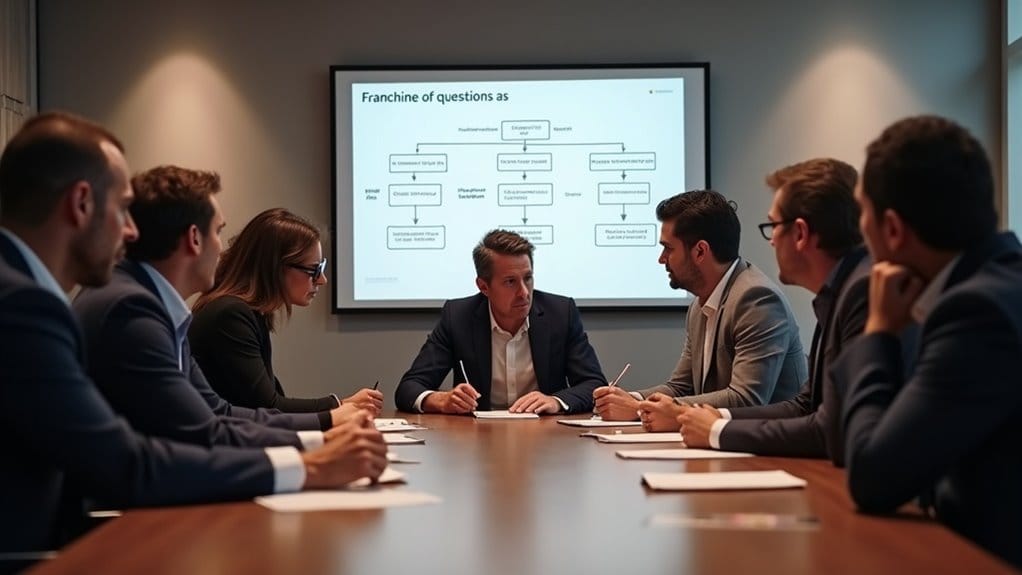
Franchise systems are increasingly facing staffing challenges, underscoring the need for robust recruitment and retention strategies. As labor shortages persist, franchisors are implementing targeted support mechanisms to help franchisees manage these complexities. This focus on effective staffing practices is essential for maintaining operational efficiency and ensuring franchisee success in a competitive labor market.
High levels of burnout in crucial sectors such as healthcare and food service further exacerbate staffing challenges for franchises. Additionally, franchises with effective support mechanisms report improved staffing ratios, thereby mitigating these issues.
Recruitment and Retention Strategies
As the quick-service industry continues to expand, the challenges of recruitment and retention have become increasingly crucial for franchise systems. Franchises experience high turnover, with only 54% of employees remaining after 90 days, underscoring the need for effective recruitment strategies. High turnover costs impact productivity and customer satisfaction, prompting franchises to implement robust retention initiatives.
- Competitive Compensation: Offering high wages and benefits is essential to attracting and retaining employees. Franchises that prioritize comprehensive training often see improved employee satisfaction and commitment.
- Career Development Opportunities: Providing clear advancement paths improves job satisfaction and loyalty.
- Workforce Education Programs: Implementing educational initiatives has proven to significantly improve retention rates, as employees in education programs exhibit 40% higher retention.
Support for Staffing Issues
Effective recruitment and retention strategies set the foundation for addressing staffing challenges within franchise systems. Franchisors provide crucial operational support, including standardized training and ongoing communication, which improves employee engagement and facilitates staffing solutions. The integration of technology further streamlines staffing activities and compliance.
Franchising offers comprehensive operational support that helps franchisees optimize their staffing processes.
| Staffing Solutions | Benefits |
|---|---|
| Centralized HR Management | Improves efficiency and compliance |
| Seasonal Staffing Forecasting | Prepares for fluctuating demands |
| Employee Recognition Programs | Reduces turnover and elevates morale |
| Standardized Training Programs | Guarantees operational consistency |
| Flexible Work Arrangements | Attracts and retains diverse talent |
These structured approaches foster a cohesive environment, enabling franchisees to navigate staffing complexities effectively and strengthen workforce stability.
What Is the Average Time to Achieve Cash Flow Break-Even?
Achieving cash flow break-even is a crucial milestone for many businesses, with most franchises reaching it within 12 to 36 months of launch. Variability in this timeline often hinges on operational efficiency, market demand, and initial investment costs.
Achieving cash flow break-even is vital, typically occurring within 12 to 36 months after launch, influenced by various operational factors.
- Service-based franchises and quick-service restaurants typically achieve break-even faster.
- Accelerating revenue growth by 10% can notably reduce break-even time.
- Key factors include effective cost management and strategic location selection.
Conducting a thorough break-even analysis is fundamental to understanding the interplay between revenues and expenses, enabling franchisees to monitor their progress toward profitability effectively. Additionally, franchises benefit from structured funding models that ensure better resource allocation and financial planning, ultimately leading to faster break-even timelines. By focusing on these elements, franchise owners can improve their chances of reaching cash flow break-even more swiftly.
How has the Franchise’s financial Performance Matched Your Expectations?

The alignment between expected and actual earnings in a franchise can reveal significant insights into franchisees’ financial performance. Factors such as the break-even timeline and profitability challenges often play critical roles in shaping these expectations. Analyzing discrepancies between projected financial outcomes and actual-world results can provide valuable lessons for prospective franchisees.
Expected vs. Actual Earnings
While many franchisees enter the industry with optimistic financial projections, actual earnings often fall short of expectations. A significant portion of food franchise owners, about 41%, earn less than $50,000 annually, challenging initial earnings expectations. Additionally, the median income for these franchises hovers around $70,000, reflecting the impact of startup phases and operational challenges.
- Income verification through franchise disclosure documents can clarify practical financial outcomes.
- Variability exists across industries, locations, and management experience, influencing actual earnings.
- Multi-unit ownership typically results in substantially higher income averages.
Understanding these dynamics is essential for aspiring franchisees seeking a practical perspective on potential earnings and the factors affecting their financial performance.
Break-even Timeline Insights
How do break-even timelines compare with franchisees’ initial expectations? Franchisees often find that operational break-even periods vary markedly based on the business model. Membership-driven franchises typically attain break-even within 2-4 months, aligning well with optimistic forecasts.
Conversely, traditional retail franchises may take 12-24 months to complete, often surprising new owners. Quick-service restaurants (QSRs) generally reach break-even in 12-24 months, while full-service restaurants may take 18-36 months or more. The key to aligning expectations lies in thorough break-even analysis and effective revenue optimization strategies.
Factors such as location, market competition, and operational management play vital roles, underscoring the importance of strategic financial planning in achieving anticipated milestones.
Profitability Challenges Faced
Franchisees frequently grapple with significant profitability challenges that deviate sharply from their initial financial expectations. As economic conditions evolve, several pressing profitability concerns emerge, deeply affecting sales strategies:
- Poor sales have become a predominant issue, escalating from 3% to 15% among franchise executives, mainly due to inflation-driven budget constraints on customers.
- Labor quality and availability have surged, complicating operations and further constraining profits.
- Market saturation and intense competition force franchisees to refine their marketing efforts to sustain traffic and protect margins.
These factors collectively hinder profitability, compelling franchisees to continuously adapt their sales strategies as they navigate a landscape of rising costs and changing consumer behavior. The challenge lies in aligning performance with initial aspirations.
What Kind of Ongoing Training and Support Do You Receive?

What types of ongoing training and support are essential for franchisee success? The effectiveness of training is foundational to franchise evolution. Continuous education through regular training, coaching, and access to events improves knowledge and fosters community among franchisees. A structured approach to support can significantly impact operational consistency and customer satisfaction.
| Type of Support | Description | Impact on Success |
|---|---|---|
| Onsite Training | Hands-on training at franchise locations | Addresses specific operational needs |
| Online Training | Digital platforms for flexible learning | Improves accessibility |
| Peer Learning | Forums for discussions | Builds a supportive community |
| Re-Certification | Periodic assessments | Guarantees standards are maintained |
| Learning Management | Tech to track progress | Improves visibility and adaptation |
Such extensive support structures ultimately lead to improved financial performance.
How Would You Describe the Relationship Between Franchisees and the Franchisor?
The relationship between franchisees and franchisors is characterized by a complex interplay of support and communication dynamics that significantly influences overall performance. Trust and collaboration levels are critical factors; a strong foundation in these areas can lead to mutual benefits and improved loyalty. Conversely, any breakdown in communication or support can strain this relationship, highlighting the need for ongoing engagement and transparency.
Support and Communication Dynamics
How effectively communication flows between franchisors and franchisees can significantly influence their relationship dynamics. Transparent and respectful communication fosters a healthier partnership. Regular, varied interactions, such as meetings and informal check-ins, improve connection and trust. Effective feedback mechanisms are vital; franchisees should feel secure sharing insights without fear of reprisal.
- Clear, timely information sharing improves fairness and satisfaction.
- Autonomy in local marketing correlates with increased franchisee satisfaction.
- Ongoing support and training are essential for overcoming obstacles and optimizing performance.
In essence, the dynamic between franchisors and franchisees thrives on communication effectiveness and mutual understanding, ultimately shaping a productive and supportive business environment.
Trust and Collaboration Levels
Trust and collaboration serve as the foundational pillars of the relationship between franchisees and franchisors. Trust behaviors, such as honesty and transparency, foster a culture of mutual growth. Collaboration dynamics thrive when franchisees feel valued as stakeholders rather than mere operators. The following table outlines key factors that influence these relationships:
| Factor | Trust Behaviors | Collaboration Dynamics |
|---|---|---|
| Honesty | High levels of transparency | Encourages open dialogue |
| Fairness | Perception of equity | Strengthens loyalty |
| Support Services | Ongoing assistance | Builds confidence |
| Autonomy | Increased satisfaction | Enables franchisees |
| Cultural Alignment | Shared values | Reduces conflicts |
What Are the Most Significant Financial Pain Points You’ve Experienced?

What financial challenges do franchisees frequently encounter? Many face significant cash flow issues stemming from complex financial obligations. Common pain points include:
Franchisees often struggle with cash flow issues due to underestimated costs and ongoing financial obligations.
- Underestimating startup costs, leading to unexpected cash shortages from permits and operational expenses.
- Inflation and rising prices, reported by 21% of franchisees, are exerting pressure on profitability and cash flow.
- High fees and royalties, including automatic deductions, complicate financial planning and strain resources.
These financial challenges create a landscape where careful management is vital. Franchisees often find themselves navigating unforeseen expenses and ongoing operational costs that exceed initial projections, necessitating robust financial strategies to sustain business viability.
How Flexible Is the Business Model Regarding Personal Time and Lifestyle?
Franchisees frequently encounter financial challenges, underscoring the importance of operational flexibility within business models. Schedule flexibility has emerged as a top priority, especially among millennials and Gen Z, who seek franchises that align with their lifestyle demands. Prospective franchisees are increasingly drawn to models that allow them to escape traditional 9-to-5 constraints, reflecting a broader cultural shift towards work-life balance.
Flexible business structures, such as single-unit or multi-unit options, enable franchisees to adapt their time commitments to individual circumstances, reducing burnout risk. Moreover, advancements in technology and robust support systems further enhance operational flexibility, allowing the franchisees to prioritize both financial goals and personal time management, ultimately fostering greater satisfaction and long-term sustainability.
What Do You Wish You Had Known Before Becoming a Franchisee?

How can potential franchisees prepare for the complexities of business ownership? Understanding what current franchisees wish they had known can provide valuable insights. Many emphasize the importance of franchise expectations and financial transparency, highlighting the need for thorough due diligence. Key considerations include:
- Investigating the franchisor’s reputation and compliance status.
- Scrutinizing the Franchise Disclosure Document (FDD) for financial commitments.
- Acknowledging limitations in operational control and brand standards.
Franchisees often regret not recognizing the financial implications of ongoing expenses and the restrictive nature of franchise agreements. By addressing these factors early, prospective franchisees can mitigate risks and align their goals with the franchisor’s vision, fostering a more successful franchise experience.
How Has Your Experience Been With Site Selection and Territory Viability?
Steering through the complexities of business ownership extends beyond initial expectations and financial considerations; site selection and territory viability are pivotal to a franchisee’s success. Practical site evaluation hinges on understanding customer demographics, such as age and income levels, which directly influence the potential customer base. Franchisees have found that analyzing foot traffic patterns and competitive density helps identify ideal locations while avoiding oversaturation.
Collaboration with franchisors on market research and demographic surveys provides invaluable insights that enhance decision-making. Furthermore, leveraging advanced consumer intelligence tools allows for an all-encompassing view of market dynamics, ensuring that territory alignment with target demographics fosters sustained customer engagement and long-term growth. Consequently, informed site selection is crucial to a franchisee’s successful venture.
What Strategies Have You Employed to Adapt to Market Changes?

In what ways can franchise operators effectively navigate the constantly changing landscape of market dynamics? To remain competitive, franchisees employ thorough market adaptation strategies and conduct rigorous competitive response analysis. They utilize data analytics to assess market shifts and competitor actions, enabling informed strategic pivots.
Franchise operators thrive by adapting strategies and leveraging data analytics to navigate shifting market dynamics effectively.
- Improved training programs guarantee consistent performance across franchises.
- Flexible business models allow for tailored adjustments to meet local demands while preserving brand integrity.
- Digital transformation initiatives, including AI-driven tools, boost operational efficiency and consumer engagement.
Would You Recommend This Franchise to Others, and Why?
What factors influence a franchisee’s decision to recommend their Franchise to others? Franchise satisfaction plays a pivotal role, shaped by several recommendation drivers. Key among these are national branding and strong corporate support, which boost confidence and encourage endorsements. Furthermore, reduced business risks associated with franchises, coupled with lower marketing costs stemming from established brand recognition, bolster positive sentiment, financial stability, and lower failure rates than independent startups, further inspiring franchisees to advocate for their brand.
Practical managerial guidance and ongoing training from franchisors also contribute to a franchisee’s willingness to recommend the Franchise. Ultimately, these elements coalesce to create a supportive community, fostering belonging and trust among franchisees and potential investors alike.
Frequently Asked Questions
What makes franchise validation interviews so important?
Franchise validation interviews give you an insider’s perspective that no brochure or sales pitch can provide. They help you verify claims, understand real-world challenges, and make a confident, informed decision.
What Is the Typical Franchisee Turnover Rate?
Typical franchisee turnover rates can exceed 130% annually, driven by factors such as employee disengagement and inadequate recognition. Enhancing franchisee retention through practical training and support can significantly mitigate these challenges, fostering a more stable workforce.
How Does the Franchise Handle Local Competition?
The Franchise employs competitive strategies to assess local competition, enhancing its market positioning. By analyzing consumer behavior and competitor offerings, it identifies distinctive selling points that differentiate itself, fostering a sense of belonging among its customer base.
What Marketing Support Does the Franchisor Provide?
The franchisor provides extensive marketing support, including national advertising strategies and localized promotional campaigns. This multifaceted approach improves brand visibility, engages franchisees effectively, and fosters a sense of belonging within the broader franchise community.
Are There Any Hidden Fees or Costs?
Amid the financial landscape of franchising, hidden fees like royalties and escalating startup costs often lurk in the shadows. Awareness of these expenses is crucial for sustainable profitability and long-term operational success in franchise ownership.
How Do Franchisees Communicate With Each Other?
Franchisees communicate through peer networking in structured advisory councils and informal gatherings. They utilize communication platforms, including digital tools and video conferencing, to exchange insights, fostering collaboration and strengthening community ties within the franchise system.
Conclusion
Choosing a franchise can be one of the most exciting steps in building your future, and there truly isa right franchise for anyone willing to do the research and put in the elbow grease. When you ask good questions, check the facts, and learn from real franchise owners, you give yourself the power to make a wise, confident choice. The franchise world is full of opportunity, and the more you learn, the brighter your path becomes.
Remember, you ddon’thave to do this alone. Working with a reputable, experienced franchise broker can save you time, protect your investment, and guide you toward options that align with your goals and budget. With the right help, you can move forward with clarity and excitement.
Most importantly, stay positive and take your next step with confidence. There is a franchise out there for you if you are willing to explore, ask questions, and put in consistent effort. To get expert guidance and personal support, contact Start a Business Today and begin your franchise journey with someone who has your back.
References
- https://www.franchoice.com/contacting-franchise-owners-validation-questions/
- https://www.franchisesidekick.com/blog/validation-call-questions
- https://drucarpenito.com/important-questions-to-ask-franchise-owners-during-validation/
- https://toastedyolkfranchise.com/franchise-interview-questions-and-answers/index.html
- https://emergentgrowthadvisors.com/validation-questions-handbook.html
- https://www.ifpg.org/buying-a-franchise/questions-to-ask-during-the-franchisee-validation-process
- https://onehourheatandairfranchise.com/what-can-you-learn-from-one-hour-franchise-owners-top-questions-for-a-franchise-validation-call/
- https://www.youtube.com/watch?v=EdWD6oFslJw
- https://franchisebusinessreview.com/post/franchisee-satisfaction-a-key-consideration-among-potential-franchise-buyers/
- https://www.franchiseinsights.com/franchise-prospects/franchises-are-increasingly-preferred-over-purchases-of-existing-businesses/