
Clearwater, FL Franchise Consulting: A Practical Guide to OwnershipFranchise Consultant Services in Clearwater, FL — Your Practical Guide to Franchise Ownership
If you’re thinking about franchise ownership in Clearwater, a local franchise consultant can match your goals and budget to real opportunities—and make the selection and financing process far less overwhelming. This guide walks through how franchise consulting works, why Clearwater is a smart market for growth, how to evaluate sectors and lower-cost concepts, and the step-by-step path from first interest to opening day. You’ll get practical due diligence steps, an overview of standard financing options such as SBA loans and 401(k) rollovers, and guidance on local networks that accelerate early success. The piece also includes side-by-side comparisons of sectors and financing, a list of questions to ask franchisors, and recurring patterns among successful local owners. Throughout, we show how working with a Clearwater-based consultant—or a lead-generation facilitator—can connect you to vetted opportunities and shorten your path to ownership.
Why Choose Franchise Consulting Services in Clearwater, FL?
Franchise consulting in Clearwater blends national franchising know-how with on-the-ground local insight. Consultants turn broad franchising principles into neighborhood-level opportunity maps that show where household spending, visitor traffic, and available labor align with specific franchise formats. They also take on time-consuming tasks—reviewing Franchise Disclosure Documents (FDDs), coordinating franchisor conversations, and matching financing options—so you avoid common missteps and move to a confident decision faster. For many buyers, local navigation is the difference between a stalled search and a signed franchise agreement. Below, we outline how consultants support both selection and financing.
This section highlights three core consultant benefits in Clearwater:
- Market-tailored matching: Consultants pair your skills, capital, and ambitions with franchise concepts that align with Clearwater and the broader Tampa consumer profile.
- Access to vetted opportunities: Consultants shorten your timeline to proven franchises that include solid franchisee support and performance history.
- Risk reduction and negotiation support: Consultants help review FDDs, benchmark performance, and negotiate startup terms that protect your investment.
What Are the Benefits of Hiring a Local Franchise Consultant?
A local franchise consultant brings practical advantages: neighborhood-level demand knowledge, existing franchisor contacts, and familiarity with regional lenders. They’ll shrink a broad franchise universe to concepts with real territory potential and manageable startup costs based on Clearwater demographics and commercial patterns. Consultants also interpret FDD data and convert historical franchisee performance into realistic forecasts for your market, lowering uncertainty for first-time and repeat buyers. Working with a local expert speeds due diligence and opens direct channels to franchisors and lenders—making financing and site selection smoother.
How Does Clearwater’s Market Support Franchise Growth?
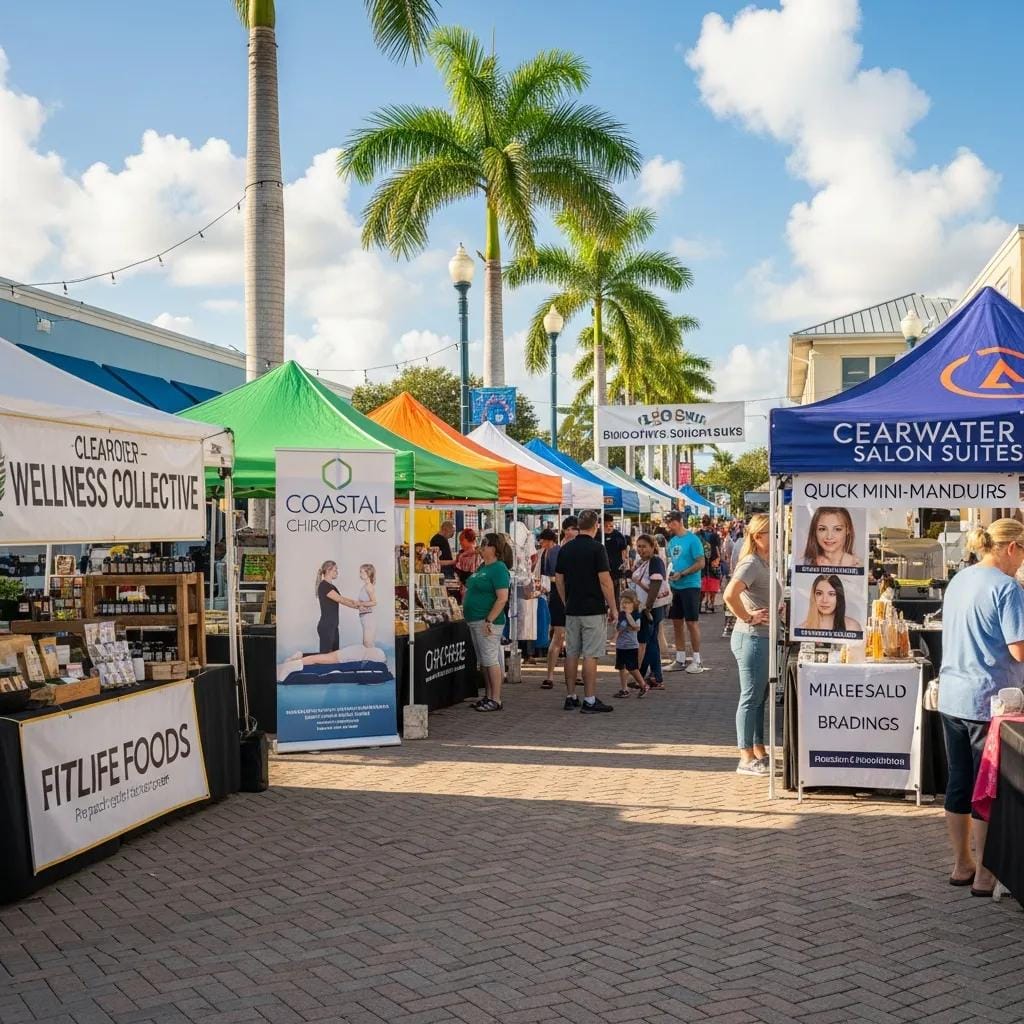
Clearwater supports franchise growth through steady neighborhoods, seasonal tourism, and a consumer base that favors personal services and convenience retail. Spending on health and wellness, home upkeep, and dining often benefits scalable franchise models that balance recurring revenue with reasonable operational demands. Local workforce and commuting patterns also favor franchise formats that allow flexible scheduling or capture evenings and weekends. Reading these local signals helps you judge whether an asset-light or asset-heavy model fits your goals—and how site choice plus targeted marketing can speed break-even.
Those local indicators feed into the sector comparisons below, which quantify typical investment and complexity across leading categories.
Exploring Franchise Opportunities in Clearwater, FL
In Clearwater, you’ll find franchise options across health & wellness, home services, food & retail, and personal services—each with different capital needs, demand drivers, and operational complexity. Evaluating sectors means balancing startup capital, expected local customer volume, and the level of hands-on involvement you want. Asset-light models (e.g., certain personal services or B2B home services) reduce real estate and inventory exposure, whereas food and retail typically require more capital and a more selective location strategy. The table below helps you prioritize opportunities that match your money and appetite for involvement.
| Sector | Typical Investment Range | Local Demand / Operational Complexity |
|---|---|---|
| Health & Wellness | $50,000 – $250,000 | Strong local demand; moderate staffing needs; benefits from memberships and repeat business |
| Home Services | $30,000 – $200,000 | High demand for convenience; often asset-light with emphasis on scheduling and route efficiency |
| Food & Retail | $150,000 – $750,000+ | Tourism-driven peaks; highly location sensitive, with heavier labor requirements |
| Personal Services | $20,000 – $150,000 | Lower-to-moderate investment; scalable with franchisor support and local marketing |
Which Franchise Sectors Are Thriving in Clearwater?
Personal services, health & wellness, and select home services are showing traction in Clearwater because they depend on regular consumer needs rather than one-off big purchases. Personal services—like specialty care, beauty, or mobile convenience—do well with lower real estate costs and steady local traffic. Health & wellness franchises tap into preventive care trends and memberships to generate recurring revenue. Home services meet ongoing homeowner needs and often scale through efficient team management rather than costly storefronts. Sector fit comes down to gauging local demand, competitive density, and how much operational time you can commit.
What Are the Best Low-Cost Franchise Options Available?
Low-cost franchises in Clearwater are those with lower upfront capital, minimal real estate needs, and lean staffing—making them a good fit for first-time owners or those pursuing asset-light growth. Examples include mobile service models, certain personal care concepts, and small-format specialty retail with flexible territories. When evaluating low-cost options, look for clear Item 19 disclosures in the FDD, reasonable royalty structures, and demonstrated local support from the franchisor on marketing and operations. Lower investment cuts entry risk, but success still depends on disciplined local marketing and consistent execution.
Understanding the Franchise Selection Process in Clearwater
Picking the right franchise follows a straightforward process: self-assessment, market research and matching, due diligence (including FDD review), financial planning, then negotiation and onboarding. Each stage has required documents, realistic timelines, and specific consultant tasks that streamline decision-making. Sticking to this sequence reduces duplicated work and flags issues early so you can focus on the best-fit opportunities. The checklist below maps the selection steps to the required documents and explains how a consultant can help at each stage.
| Selection Step | Required Documents | Consultant Support |
|---|---|---|
| Self-assessment | Personal financial summary, resume, goals | Align skills and capital; clarify goals and timelines |
| Discovery & Matching | Initial franchisor info, market probes | Create a shortlist and analyze territory viability |
| Due Diligence | FDD, franchisee contacts, and financial statements | Review FDD, coordinate franchisee interviews, benchmark performance |
What Steps Are Involved in Choosing the Right Franchise?
Choosing the right franchise is a series of practical steps that starts with a personal assessment and ends with onboarding and opening. Start with a skills-and-goals audit and a detailed budget that includes working capital and contingencies. Next, do market discovery to identify sectors and specific concepts with territory analysis and demand checks. Then run thorough due diligence: FDD review, franchisee references, and financial modeling to project cash flow. Finally, secure financing, finalize agreements, and complete franchisor training and site selection. Following this order reduces surprises and creates a predictable path to opening day.
Which Questions Should You Ask Potential Franchisors?
When you talk to franchisors, ask focused questions about finances, operations, support, and legal terms to set realistic expectations. Ask for a breakdown of the initial franchise fee and ongoing royalties, and clarify marketing fees and what those funds buy. Ask about the training program, field support frequency, and how often the system or products are updated. Request average unit performance data, franchisee turnover rates, and termination or transfer policies to judge long-term stability. These answers give the evidence you need to compare options and negotiate responsibly.
Navigating Franchise Financing Options in Clearwater, FL

Standard financing options for Clearwater franchises include SBA 7(a) and 504 loans, 401(k) rollovers (ROBS), and private lenders—each with different sizes, timelines, and best use cases. SBA 7(a) loans are frequently used for working capital and acquisitions, while SBA 504 loans are aimed at fixed assets with longer-term, lower-rate financing. 401(k) rollovers let you use retirement savings without monthly loan payments, but require careful compliance. The table below summarizes core financing types so you can match options to your capital plan and timing.
| Financing Type | Typical Loan Size | Typical Interest / Timeline | Suitability |
|---|---|---|---|
| SBA 7(a) | $50,000 – $5M | Moderate interest; 30–90 day approval | Good for working capital and acquisitions when you qualify for SBA backing |
| SBA 504 | $125,000 – $20M+ | Lower rates for fixed assets; longer closing | Best for real-estate-heavy franchises and major equipment purchases |
| 401(k) Rollover (ROBS) | Varies by account | No traditional interest; requires setup time | Useful for owners with retirement funds who want to avoid loan payments |
| Private Loans | $10,000 – $500,000 | Higher rates; faster funding | Good for gap financing or smaller deals where speed and flexibility matter |
How Can SBA Loans Support Your Franchise Investment?
SBA loans make franchise investment more manageable by offering longer terms and lower down payments than many conventional loans, which helps cash flow during ramp-up. The 7(a) program covers working capital, inventory, and acquisitions; the 504 program targets fixed assets like real estate and equipment with favorable amortization. Eligibility usually requires solid personal credit, a solid business plan, and sometimes collateral; approval timelines range from several weeks to a few months, depending on the lender. Working with lenders who understand franchise underwriting and preparing complete documentation early will speed approvals and improve your chances of funding.
What Are the Benefits of Using a 401 (k) Rollover for Business Ownership?
A 401(k) rollover to start a business (ROBS) lets entrepreneurs tap retirement savings for a startup without early withdrawal penalties—effectively accessing capital without monthly loan payments. The upside is more cash flexibility during launch; the downside is regulatory complexity and risk to retirement funds. ROBS requires careful ERISA compliance and ongoing reporting, so it’s best for those with significant retirement balances who accept that investment risk. Use tax and ERISA advisors plus an experienced franchise consultant to implement ROBS correctly and meet ongoing obligations.
Accessing Clearwater Business Ownership Resources and Support
Clearwater entrepreneurs can tap Small Business Development Centers, county economic development programs, and franchisor networks for training, incentives, and licensing help. These resources offer low-cost coaching on business plans, introductions to local lenders, and step-by-step guidance on permits. Local networking groups and chambers provide peer learning and referral channels that jump-start customer acquisition. Below are the primary resource types and what they typically offer franchise owners.
- Small Business Development Centers: One-on-one business planning, financial modeling, and market research help.
- County economic development: Local market data, potential incentives, and site-selection guidance.
- Local lenders and community banks: SBA-capable lending products and regional underwriting experience.
What Local Resources Assist Franchise Entrepreneurs?
Local resources in Clearwater extend franchisor onboarding with practical planning, financing, and compliance support. SBDCs typically provide coaching on business plans and cash-flow models that lenders expect. Pinellas County economic development offers market intelligence and site-introduction support, and community banks often keep SBA expertise useful for franchise loans. Local permitting offices guide licensing to avoid delays. Together, these resources reduce administrative friction and help new owners move from signed agreement to opening day with fewer surprises.
How Does Networking Enhance Franchise Success in Clearwater?
Networking connects new owners with experienced peers, referral partners, and local channels, thereby shortening customer-acquisition cycles. Chamber events and peer groups offer hands-on lessons about hiring, vendor choices, and managing seasonal demand specific to Clearwater. Franchisor regional meetings and franchisee groups create opportunities for shared best practices, volume purchasing, and joint local promotions. Go into networking with clear goals—finding mentors, hiring leads, or cross-promotion partners—to get operational improvements faster than working alone.
Clearwater Franchise Success Stories and Testimonials
Local franchise results tend to follow clear patterns: careful due diligence, conservative financial planning, and active community marketing lead to earlier profitability. Owner types in Clearwater include career changers who prefer the predictability of franchised systems, multi-unit investors scaling asset-light concepts, and service professionals who convert existing clients into franchise customers. While we don’t list names or figures here, these anonymized profiles highlight common success factors like disciplined cash management, early staff training investments, and local engagement. Those patterns show the practical value of consultant support through selection and launch.
Who Are Some Successful Franchise Owners in Clearwater?
Successful Clearwater franchisees come from many backgrounds but share consistent behaviors: thorough due diligence, fast adoption of franchisor best practices, and focused local marketing. One profile is a local operator who chose an asset-light personal-services brand, kept overhead tight, and used targeted community outreach to build loyalty. Another is an investor who scaled multi-unit home services, optimized routing and staffing, and reinvested early profits to grow. In each case, deliberate planning and operational discipline—often guided by a consultant—accelerated profitability and avoided common early mistakes.
What Lessons Can Be Learned from Local Franchise Experiences?
Clearwater franchise experience yields repeatable lessons: do thorough due diligence before signing, prepare operations (hiring and training) before opening, and steadily invest in local marketing and community relationships. Owners who skimped on staffing or rushed FDD review saw slower ramps; those who engaged networks and tracked performance improved margins sooner. Build precise financial forecasts, stress-test assumptions with advisors, and put in place contingency plans to avoid early pitfalls. Following these practices increases the chance of a sustainable, scalable franchise business.
If you’re ready to act, a local facilitator can connect you to vetted concepts, support services, and financing partners to speed your path to ownership.
Business Builders — operating as a lead-generation facilitator for franchise matching and advisory in the Clearwater/Tampa area — can introduce candidates to franchise concepts, offer investment guidance and business-planning support, and coordinate end-to-end help through acquisition and early operations. If you want tailored matchmaking, advisory support, or help finding financing and local resources, consider contacting a facilitator who specializes in pairing entrepreneurs with the right franchise options for this market.
Frequently Asked Questions
What are the key factors to consider when evaluating a franchise opportunity?
When evaluating a franchise opportunity, consider factors such as the franchise’s brand reputation, market demand, and the franchisor’s support. Analyze the Franchise Disclosure Document (FDD) for financial performance, fees, and obligations. Additionally, assess your own skills and interests to ensure alignment with the franchise model. Understanding the competitive landscape and local market conditions is also crucial, as these elements can significantly impact your franchise’s success.
How can I effectively market my new franchise in Clearwater?
Effective marketing for your new franchise in Clearwater involves a mix of local advertising, community engagement, and digital marketing strategies. Utilize social media platforms to connect with potential customers and promote special offers. Participate in local events and collaborate with other businesses to increase visibility. Additionally, consider targeted online advertising and search engine optimization (SEO) to attract local traffic. Building relationships with customers through excellent service and community involvement can also enhance your brand’s reputation.
What are the typical challenges faced by new franchise owners?
New franchise owners often face challenges such as managing cash flow, understanding operational procedures, and building a customer base. They may also struggle with staffing and training employees effectively. Additionally, navigating the complexities of the franchise agreement and ensuring compliance with franchisor standards can be daunting. To mitigate these challenges, it’s essential to have a solid business plan, seek guidance from experienced consultants, and leverage the franchisor’s support.
How can I ensure compliance with franchise regulations and standards?
Ensuring compliance with franchise regulations and standards involves understanding the terms outlined in the Franchise Disclosure Document (FDD) and the franchise agreement. Regularly review the franchisor’s operational guidelines and participate in training programs. Stay informed about local business regulations and industry standards. Establishing a system for monitoring compliance and seeking advice from legal or franchise experts can help you avoid potential pitfalls and maintain a good relationship with your franchisor.
What role does customer feedback play in franchise success?
Customer feedback is vital for franchise success as it provides insights into customer satisfaction and areas for improvement. Actively soliciting feedback through surveys, reviews, and direct communication helps you understand customer preferences and expectations. This information can guide operational adjustments, marketing strategies, and service enhancements. Responding to feedback demonstrates that you value customer opinions, fostering loyalty and encouraging repeat business, which is essential for long-term success.
How can I leverage technology to improve my franchise operations?
Leveraging technology can significantly enhance franchise operations by streamlining processes and improving efficiency. Implementing point-of-sale systems, inventory management software, and customer relationship management (CRM) tools can help you track sales, manage stock levels, and maintain customer relationships effectively. Additionally, using digital marketing tools and social media platforms can enhance your outreach and customer engagement. Regularly updating your technology and training staff on new systems can improve operational performance and customer satisfaction.
What are the benefits of joining a franchise association or network?
Joining a franchise association or network offers numerous benefits, including access to valuable resources, industry insights, and networking opportunities. These organizations often provide training programs, legal advice, and marketing support tailored to franchise owners. Being part of a network allows you to connect with other franchisees, share best practices, and learn from their experiences. Additionally, associations can advocate for franchise interests at the legislative level, helping to shape policies that benefit the franchise community.
What qualifications should I look for in a franchise consultant?
Look for a consultant with hands-on franchise experience, strong local market knowledge, and a proven track record of successful placements. Credentials like membership in the International Franchise Association (IFA) are helpful, but real value comes from clear case examples, references, and strong communication. Choose someone who listens, explains trade-offs in plain language, and provides personalized support through the selection and financing stages.
How long does the franchise selection process typically take?
Timelines vary, but expect the selection process to take from a few weeks to several months. Factors include how quickly you complete your self-assessment, the depth of your due diligence, and franchisor responsiveness. A good consultant streamlines the process—shortlisting compatible concepts, arranging franchisor calls, and coordinating reference checks—to help you reach an informed decision faster.
What are the common pitfalls to avoid when starting a franchise?
Common pitfalls include inadequate due diligence, underestimating startup costs, and failing to understand the franchise agreement fully. Other mistakes are underfunding marketing or choosing a concept that doesn’t match your skills or local demand. Working with an experienced consultant and trusted advisors helps you identify these risks early and build a realistic launch plan.
How can I assess the financial health of a franchise opportunity?
Review the FDD carefully—especially Item 19, which shows financial performance representations—and speak with current franchisees for direct feedback on sales and expenses. Analyze the brand’s market position, competitive landscape, and growth prospects. Combine FDD data with realistic local sales assumptions and a cash-flow model to assess viability before committing.
What role does local market research play in franchise success?
Local research is essential: it reveals demand patterns, competitive gaps, and demographic trends that affect sales and site selection. Use market data to test assumptions about customer volume, pricing, and peak seasons. Good local research informs marketing plans, staffing models, and whether a franchise concept can hit its targets in your area.
Are there specific financing options tailored for franchise businesses?
Yes. Standard franchise financing options include SBA 7(a) and 504 loans, 401(k) rollovers (ROBS), and private lenders. SBA programs are popular for favorable terms and lower down payments; ROBS can provide debt-free capital, but requires compliance work. Evaluate each option against your timeline, credit profile, and the amount of equity you’re willing to commit.
How important is ongoing support from franchisors after opening?
Ongoing franchisor support is critical. Effective brands provide training, marketing resources, field visits, and a franchisee community for shared learning. That support reduces early mistakes and helps you scale. Evaluate a franchisor’s post-opening support during due diligence to ensure it matches your needs.
Conclusion
Working with a local franchise consultant in Clearwater can make your path to ownership clearer and faster. With tailored market insight, vetted opportunities, and help navigating selection and financing, a consultant reduces risk and increases your odds of success. Take the next step: explore local resources, connect with a consultant, and move from interest to ownership with a practical, supported plan.