
Simplify Franchise Ownership: Partner with a Franchise ConsultantWhy Working with a Franchise Consultant Makes Starting a Business Easier
Working with a franchise consultant gives prospective owners a more straightforward, faster, and lower-risk path into franchise ownership. This article shows how an experienced consultant speeds up brand selection, flags financial and contractual risks, and matches opportunities to your skills and budget. You’ll learn what consultants do day to day, how they simplify the Franchise Disclosure Document (FDD), and why a tailored match improves long-term outcomes. Many prospects get overwhelmed by marketing claims or lose time chasing poor fits — consultants solve that by applying structured vetting, financial checks, and vetted introductions. The piece is organized into five practical sections: the consultant’s core value, how they streamline the ownership process, ways they lower financial risk and boost your financial know-how, the benefits of personalized matching, and the ongoing support consultants provide as you scale. Throughout, we use terms like franchise consultant benefits, expert guidance, and franchise matching services to show how professional advice leads to better decisions and faster results.
Why Hire a Franchise Consultant? What They Actually Bring to the Table
A franchise consultant acts as a practical translator between the market, franchisors, and your personal goals. They evaluate your finances, experience, and lifestyle priorities, then narrow the market to franchises that fit realistic return and time expectations. The value is concrete: faster shortlists, access to vetted opportunities, and an unbiased read on franchisor claims so you avoid sales-driven hype. Below are the core advantages that explain why a consultant is helpful for first-time buyers and seasoned investors alike.
Key benefits a franchise consultant delivers:
- Faster selection: Targeted screening and shortlists speed up your decision-making.
- Lower risk: Due diligence uncovers financial and contract red flags early.
- Network access: Introductions to vetted franchisors and current franchisees.
- Better fit: Matches based on your skills, capital, and lifestyle goals.
These benefits explain why many entrepreneurs invest in advisory help. The section that follows breaks down the specific tasks consultants handle to create that value.
What Does a Franchise Consultant Do to Support Entrepreneurs?
A consultant starts with a structured assessment — financial profile, work history, and business goals — to identify realistic franchise categories. They then vet franchisors by reviewing performance metrics, training programs, territory models, and unit economics to build a short list of viable brands. Consultants coordinate communications, set up franchisor interviews, and guide FDD-focused analysis so you can compare options on an even footing. In short: consultant → assesses → financial feasibility, and consultant → connects → vetted franchisors — actions that lead to smarter choices in practice.
How Does Expert Franchise Guidance Lead to Smarter Decisions?

Good guidance blends comparative analysis, scenario-based financial modeling, and negotiation coaching so you decide with confidence. Consultants build side-by-side comparisons of revenue scenarios, break-even timelines, and contract terms so trade-offs are obvious. Their practical checklist—verify startup costs, confirm training commitments, and validate historical unit results—forms the foundation for negotiations and final decisions. Clear comparisons remove single-source bias and help you prioritize sustainable returns over marketing promises.
How Franchise Consultants Speed Up Your Path to Ownership
Consultants replace scattered research and cold outreach with a structured, time-boxed process focused on fit and feasibility. The consultant-assisted route typically compresses steps—screening, vetting, interviewing, deciding—into an efficient flow, cutting redundant meetings and repeated document reviews. They also translate complex documents and coordinate third-party specialists, so you move from interest to offer with fewer delays and clearer expectations. Below is a simple three-step summary, along with a practical comparison of DIY versus consultant-assisted outcomes.
A straightforward three-step process shows how consultants streamline results:
- Assess & shortlist: Quickly match your profile to suitable franchise categories.
- Vet & validate: Run due diligence on financials, support, and legal disclosures.
- Coordinate & close: Manage interviews, refine projections, and support negotiations.
This sequence shortens decision timelines and clarifies risk — the table below highlights typical differences between going it alone and using a consultant.
Intro to comparison table: The table compares typical outcomes for key steps when entrepreneurs go it alone versus when they use consultant-assisted guidance.
| Process Step | DIY Outcome (Time / Cost / Complexity) | Consultant-Assisted Outcome (Time / Cost / Complexity) |
|---|---|---|
| Selection | Months of research / Low direct cost / High complexity | Weeks to shortlist / Usually no direct cost to entrepreneur / Low complexity |
| FDD Review | Slow legal parsing / Missed flags possible / High complexity | Focused checks / Issues flagged early / Lower complexity |
| Franchisor Contact | Uncoordinated calls / Scheduling delays / Moderate time cost | Coordinated interviews / Efficient scheduling / Low time cost |
That comparison shows how consultants typically help reduce time-to-decision and clarify trade-offs. Next, we outline specific time-saving activities consultants perform.
How Do Consultants Save Time in Franchise Selection?
Consultants apply proven filters to eliminate poor fits and deliver shortlists based on validated criteria instead of marketing copy. They handle call scheduling, craft interview agendas, and consolidate responses so you review distilled insights rather than sifting through raw notes. Typical savings range from several weeks to a few months, depending on the scope of the search, because consultants remove repetitive screening and unnecessary discovery calls. Those efficiencies also extend to complex paperwork—especially the FDD—reducing friction on the path to signing.
How Do Consultants Simplify the Franchise Disclosure Document?
Consultants focus on the FDD items that matter most—financial performance representations, startup and ongoing fees, franchisee obligations, and termination clauses—and explain their practical implications in plain language. They routinely review Items 7 and 19 for historical data and earnings claims, and flag inconsistencies with third-party benchmarks. Consultants then produce action lists for legal review and negotiation priorities so you address material risks early. A precise FDD translation prepares you for more informed interviews and realistic financial planning.
| Step | FDD Focus Area | Consultant Interpretation |
|---|---|---|
| Financials | Item 7 / Item 19 (earnings claims) | Validate assumptions and model conservative projections |
| Fees | Initial fees vs ongoing royalties | Translate into a month-to-month cash-flow impact |
| Obligations | Franchisee duties and territory rules | Identify operational limits and growth constraints |
This mini-table shows how consultants turn legal and financial details into decision-ready insights—a key step toward reducing overall investment risk.
How Consultants Lower Investment Risk and Boost Your Financial Confidence
Consultants reduce investment risk through financial screening, benchmarking brand performance, and stress-testing projections to expose fragile assumptions. They evaluate unit economics, required working capital, and historical franchisee results to estimate realistic payback periods and downside scenarios. Consultants also help you build financial acumen by modeling break-even timelines and required cash buffers, thereby strengthening negotiation leverage and operational readiness. The table below summarizes the common franchise attributes consultants assess and the risk impact of those evaluations.
Intro to assessment table: This table lists franchise attributes consultants prioritize, what they check, and how that changes perceived risk for investors.
| Franchise Attribute | Consultant Assessment Focus | Risk Impact |
|---|---|---|
| Financials & Projections | Verify historical unit results / conservative modeling | Reduces the chance of overestimating revenue |
| Training & Support | Depth of operations training and field help | Lowers execution and onboarding risk |
| Brand Track Record | Franchisee churn, market fit, unit economics | Reveals sustainability and growth risk |
| Territory & Rights | Exclusivity, coverage, market saturation | Mitigates competitive and expansion risk |
This structured approach shows how targeted evaluation changes investment outcomes and leads to the screening strategies consultants use to find strong brands.
What Strategies Do Consultants Use to Spot Strong Franchise Brands?
Consultants use a weighted scoring rubric that balances unit economics, franchisor support, franchisee performance history, and growth pace to rank opportunities. They favor brands with transparent data, repeatable systems, and straightforward onboarding, marketing, and supply-chain support for new owners. Consultants also check whether your skills align with the brand’s operational demands to ensure a sustainable fit. A short checklist helps you see their criteria: verify unit profitability, confirm training depth, and assess franchisee satisfaction indicators.
How Do Consultants Help You Avoid Costly Franchise Mistakes?
Consultants help prevent common errors—overly optimistic first-year revenue estimates, underfunding working capital, and overlooking contractual details—by stress-testing assumptions and surfacing hidden costs early. They share anonymized mini-case examples that show how small changes in revenue or cost assumptions can dramatically affect payback timelines and ROI. Consultants typically recommend contingency reserves and clarify ambiguous contract terms before signing, turning vague promises into enforceable commitments. Those tactics protect capital and set realistic expectations for the first 12–24 months.
Why Personalized Franchise Matching Improves Long-Term Success
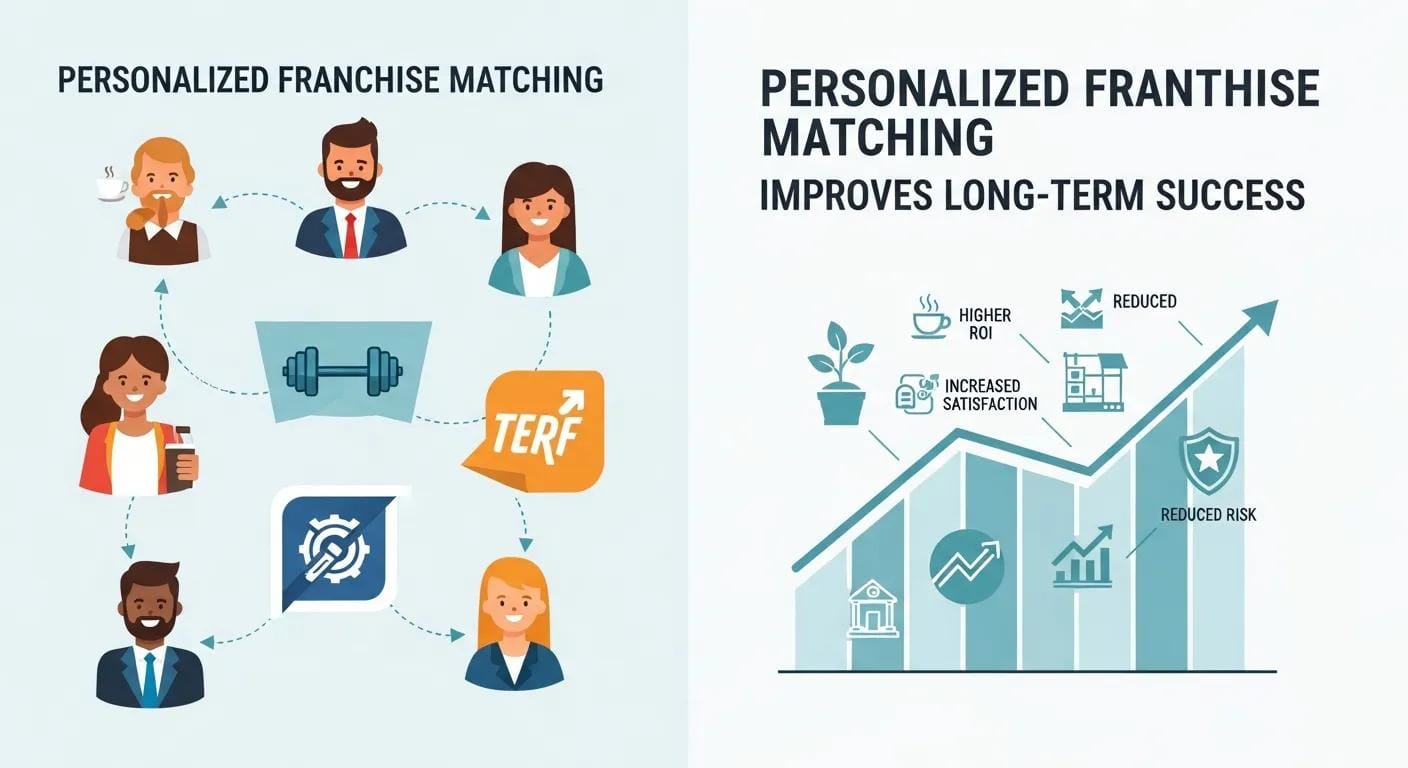
Personalized matching increases the odds of long-term success by pairing your background, risk tolerance, and lifestyle with franchise systems that align with those constraints. Matching services evaluate your experience, investment capacity, and time commitment preferences, then recommend franchise categories with higher historical success and satisfaction rates. Tailored matches reduce turnover and operational mismatch because franchisees are more likely to thrive when responsibilities and support align with their strengths. The persona-to-outcome table below shows how profile attributes map to franchise types and possible outcomes.
Intro to mapping table: This mapping shows how specific entrepreneur attributes connect to matching criteria and example outcomes of a good match.
| Entrepreneur Profile Attribute | Matching Criterion | Example Outcome |
|---|---|---|
| Managerial experience, $150k capital | Multi-unit or management franchise | Faster scale using salaried managers |
| Hands-on operator, $75k capital | Single-unit service franchise | Direct control and steady cash flow |
| Flexible schedule, lower capital | Home-based or mobile franchise | Lower overhead and flexible hours |
This mapping shows how personalized assessment reduces early churn and sets clear expectations. The following section explains the mechanics consultants use for assessment.
How Do Consultants Tailor Opportunities to Your Goals?
Consultants run structured interviews, financial profiling, and preference surveys to map motivations—building wealth, regaining time, or local impact—onto franchise categories that historically deliver those outcomes. They quantify the level of hands-on involvement each model requires and estimate timelines for achieving positive cash flow and capital return, using conservative assumptions. The process explores funding options, expected margins, and hiring timelines so you understand trade-offs before committing. Tailored recommendations turn goals into measurable milestones and make post-signing adjustments easier.
Why Unbiased Advice Matters in Franchise Selection
Unbiased advice is vital because franchisors naturally want to sell their systems. Independent consultants provide side-by-side comparisons, uncover hidden fees, and advocate for more precise terms during negotiation so you get a balanced view. Their neutrality is beneficial when marketing claims don’t match disclosure details — consultants bridge that gap with evidence-based assessments. That independent stance builds trust and improves long-term outcomes by aligning choices to realistic business performance.
| Matching Criterion | Why It Matters | Expected Benefit |
|---|---|---|
| Skill alignment | Reduces day-to-day friction | Higher chance of early operational success |
| Financial buffer | Protects against revenue swings | Lower probability of failure |
| Support intensity | Determines training and help needed | Faster competency and scaling |
This table reinforces the idea that objective matching and clear criteria lead to better decisions. Next, we look at the ongoing support consultants deliver after signing.
What Ongoing Support Do Franchise Consultants Provide for Long-Term Success?
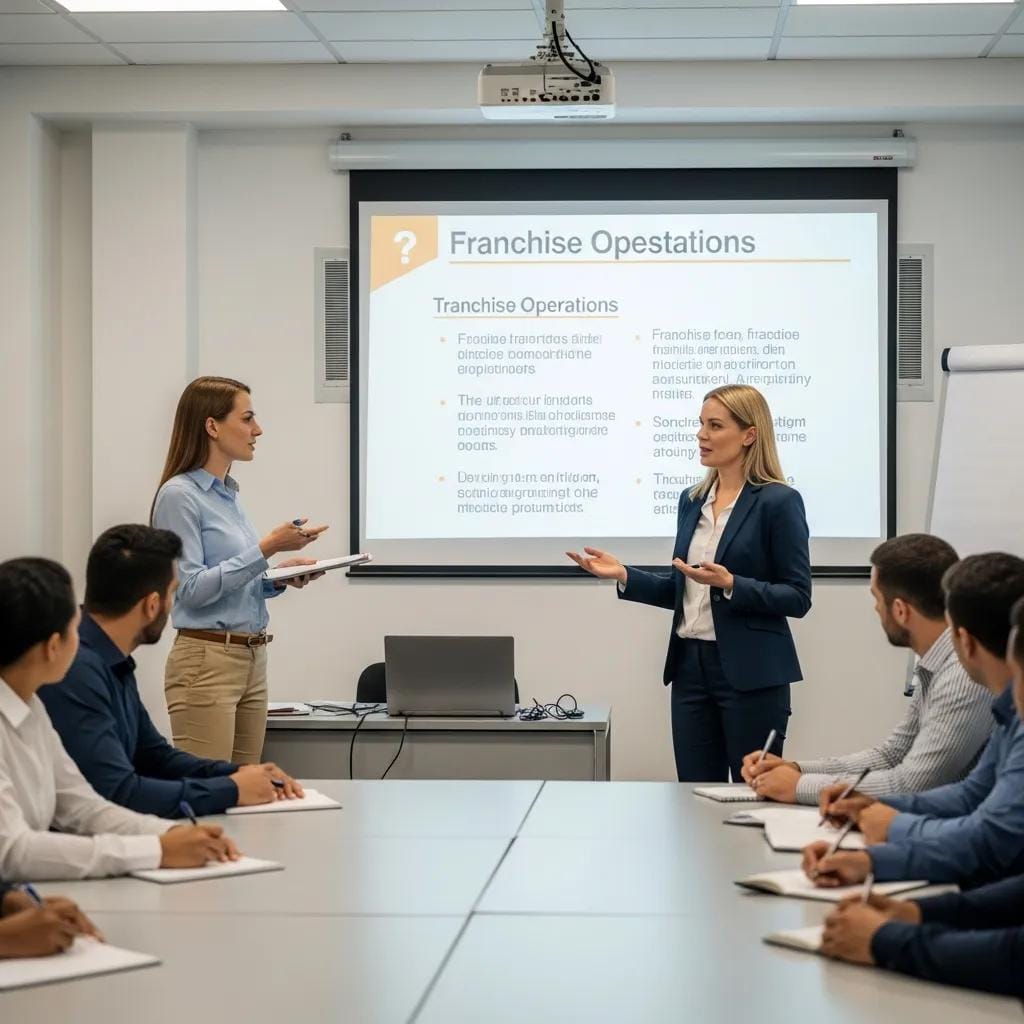
Consultants offer ongoing help that ranges from interview prep before signing to onboarding checklists and post-agreement troubleshooting, all designed to ease the transition to independent operations. They prep you for franchisor interviews with targeted questions and role-play, then map onboarding milestones so training and supply chains are ready. After signing, consultants may advise on performance metrics, recommend peer mentors, and help troubleshoot early operational issues. The list below summarizes the central services consultants commonly provide and how they support growth.
Typical ongoing services consultants provide:
- Interview and negotiation coaching so you secure more explicit commitments from franchisors.
- Onboarding checklists and timelines to get training, suppliers, and operations in place.
- Early performance monitoring and operational troubleshooting to catch issues before they escalate.
- Introductions to peers and referrals for financing, vendors, and local service providers.
These services reduce the chance of early failures and set the stage for the interview prep and onboarding milestones described next.
How Do Consultants Help with Franchisor Interviews and Post-Agreement Support?
Consultants prepare you with focused questions about training, marketing support, and historical unit performance, and they coach your responses so interviews surface the most important details. They create onboarding timelines that sequence tasks—site selection, hiring, initial marketing, inventory setup—so you meet franchisor milestones on schedule. After signing, consultants suggest KPIs and can introduce you to experienced franchisees for mentoring. That structure reduces uncertainty and speeds the move from signing to stable operation.
How Do Consultants Build a Useful Entrepreneur Network?
Consultants connect franchisees to peer networks, mentors, and vetted providers, creating an ecosystem of operational know-how and trusted vendors. These introductions shorten vendor selection—accountants, lenders, HR providers—and bring practical best practices from experienced owners. Peer groups speed problem-solving and provide performance benchmarks. By expanding your network, consultants increase your resilience and provide channels for ongoing improvement.
For entrepreneurs seeking hands-on help, Business Builders shows these services in action: they match clients with vetted franchises, review financial and background requirements to align candidates with suitable options, and emphasize personalized support, curated networks, and clear guidance through the ownership journey. Business Builders commonly structures matching so entrepreneurs don’t pay direct fees (compensation typically comes from franchisors), which clears up a frequent misconception about consultant costs.
Next steps: consider requesting a consultation through Business Builders’ site to evaluate your profile and review curated opportunities — a short conversation can turn the assessment and matching ideas here into an actionable ownership plan.
Frequently Asked Questions
What qualifications should I look for in a franchise consultant?
Look for real franchise experience, affiliations or certifications with recognized franchise organizations, and a track record of successful placements. Also, check their familiarity with different franchise models and their ability to give tailored advice for your situation. Good consultants communicate clearly and have a network of franchisors and franchisees to support introductions and follow-up.
How much does hiring a franchise consultant typically cost?
Fees vary. Many consultants are compensated by franchisors, which can mean little or no direct cost to you. Others charge flat fees or hourly rates for specific services. Please always make sure the fee structure is upfront so you understand who pays and whether there are any out-of-pocket costs.
Would a franchise consultant be able to help with financing options?
Yes. Consultants often guide you through funding choices — traditional bank loans, SBA loans, or alternative financing — and help prepare financial documents and business plans lenders need. Their experience can make the funding process smoother and increase your chances of approval.
What do you think I should expect during the initial consultation with a franchise consultant?
The first meeting typically covers your background, financial situation, and goals. You can expect questions about preferences, time availability, and what you want from ownership. It’s also your chance to ask about the consultant’s process, experience, and examples of matches they’ve made.
How long does the franchise selection process typically take with a consultant?
Timelines vary, but consultants usually move faster than a DIY approach. The whole process often takes a few weeks to a few months, depending on your readiness, the complexity of needs, and how many franchises you want to consider. Consultants speed things up by narrowing options and coordinating conversations with franchisors.
What ongoing support can I expect after signing a franchise agreement?
After signing, consultants may help with onboarding, early performance monitoring, and troubleshooting operational issues. They can also connect you with mentors and resources to help you hit early milestones and grow your business more confidently.
How do franchise consultants ensure a good match between entrepreneurs and franchises?
Consultants use detailed assessments of your skills, finances, and lifestyle goals. They combine structured interviews and preference surveys with market analysis to recommend franchises that align with your profile. That focus on compatibility helps reduce turnover and increases the chance of long-term success.
Conclusion
Working with a franchise consultant can make your path to business ownership more transparent and less risky. A good consultant matches your skills and goals with the right opportunities, strengthens your financial understanding, and connects you to networks that support growth. If you’re ready to move forward, you can explore our services and book a consultation to turn these ideas into a practical plan for ownership.