

Best Storefront Franchises for Your Retail Business Success
Best Retail Franchise Opportunities in 2026 — A Practical Guide to Profitable Ownership and Investment
Retail franchise ownership pairs a proven business model with local execution to generate repeatable revenue for franchisees. In 2025, the retail landscape is shaped by steady spending on essentials, faster omnichannel adoption, and franchisor innovations that improve predictability and scale, making now a strong time to review top retail franchise opportunities. This guide walks through what a retail franchise is, why 2026 conditions favor investors, the franchise types worth considering, and practical steps for selecting and financing the right opportunity. You’ll find clear cost ranges, the main drivers of profitability, sector comparisons, and targeted due diligence guidance (including how to read the Franchise Disclosure Document). After a short note on available support resources, the article follows the sequence entrepreneurs typically face: market rationale, franchise categories, a selection framework, cost breakdowns, sectors with strong profit potential, and how Business Builders helps match qualified buyers to the right fit.
Business Builders serves as a broker, connecting aspiring and experienced entrepreneurs with vetted franchise and small-business opportunities. We provide guidance, pre-screen financial and background readiness, and align candidates to franchises that match their goals. This mention explains how a broker can speed up the search while preserving the objective market analysis. With that context, the rest of the article focuses on evidence-backed franchise selection and practical investment planning, keeping brokerage support as a complementary resource where applicable.
Why Choose Retail Franchise Opportunities in 2026?
A retail franchise is a locally run business that operates under a franchisor’s systems, brand, and ongoing support. In 2026, several macro factors make this model particularly appealing: moderate inflation on essentials, persistent consumer demand for convenience, and broad omnichannel shopping behavior that creates steadier footfall and online sales. Franchising reduces many startup risks by offering training, supply‑chain leverage, and coordinated marketing — all of which can shorten the path to breakeven versus launching an independent store. Financing remains accessible for qualified buyers, and more franchisors now include technology tools that help improve inventory turns and customer retention. Together, these elements create a resilient profile for many small retail franchises today.
Below are concise market trends that explain how these forces translate into investor outcomes. Understanding them helps you compare franchise types and match models to your goals.
What Market Trends Make Retail Franchises a Smart Investment in 2026?
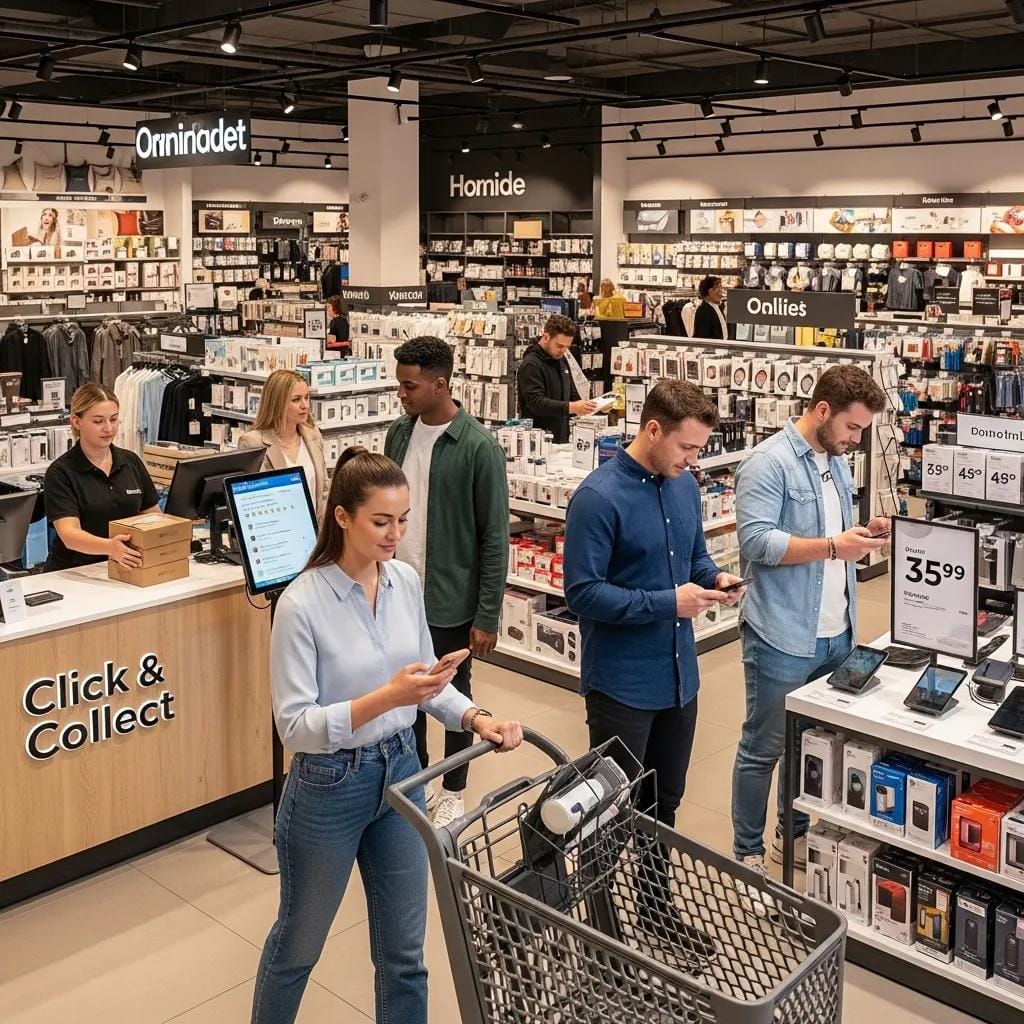
Retail franchises benefit from steady spending on essentials and growing demand for convenience services, both of which support stable unit economics. Technology — particularly omnichannel ordering, automated inventory systems, and customer data platforms — reduces friction and boosts repeat purchases, thereby raising average revenue per location. In 2026, we’re seeing unit growth in specialty retail and service-adjacent stores as franchisors adapt formats to lower capex and smaller footprints. Easier access to franchise financing and streamlined onboarding also shorten time‑to‑open for qualified buyers, improving early cash flow prospects.
These trends help explain why franchisors that prioritize tech-enabled operations and recurring-demand categories tend to deliver more predictable returns. Next, we’ll contrast ownership across storefront, mobile, and e-commerce-enabled formats.
How Do Retail Franchises Offer Financial Freedom and Self-Employment?
Franchise ownership can create financial independence by turning managerial effort into repeatable revenue through standardized systems and brand recognition. Owners can scale by adding units or operating semi‑absentee models. Typical revenue streams include point‑of‑sale margins, subscription or membership options, and add-on services that lift per‑customer spend; with careful cost control, many franchises reach breakeven within 12–24 months. Franchisor support — training, procurement, and marketing — shortens the learning curve, allowing operators to focus on local execution and growth. Multi‑unit owners benefit from shared staffing, centralized purchasing, and territory synergies that improve net margins and open a path from single-store ownership to a portfolio that generates more passive income.
With these operational and scaling mechanics in mind, the following section categorizes retail franchise types so you can match model characteristics with your capital, time, and lifestyle goals.
What Are the Top Types of Retail Franchises to Consider?
Retail franchises differ by product mix, footprint, and operational complexity. The right type depends on your capital, desired involvement, and local market. Common categories include consumer goods stores (specialty product retailers), specialty retail (niche formats), service-focused retail (repairs, wellness), and hybrid e-commerce models that combine a small storefront with online sales. Each has trade‑offs around inventory, margin structure, staffing, and site sensitivity, so align category choice with your risk tolerance and objectives. The table below summarizes typical investment ranges and why each format suits confident investors.
| Franchise Type | Typical Investment Range | Why does it fit confident investors |
|---|---|---|
| Consumer goods franchises | $75,000 – $300,000 | Best for owners who want a physical retail presence and inventory-driven margins |
| Specialty retail franchises | $50,000 – $200,000 | Suitable for investors seeking niche differentiation and stronger customer loyalty |
| Service-focused retail franchises | $40,000 – $250,000 | Appeals to operators who prioritize recurring service revenue and lower perishability |
| E-commerce / hybrid retail franchises | $30,000 – $200,000 | Ideal for footprint-light investors who want omnichannel sales and lower fixed costs |
This comparison clarifies which formats match typical investor constraints and ambitions. Next, we highlight leading consumer goods niches and contrast operational models.
Which Consumer Goods and Specialty Retail Franchises Are Leading in 2026?
Top consumer goods and specialty retail concepts in 2026 combine recognizable brands with recurring purchase behavior and curated assortments that build loyalty. Examples include pet-focused retail, specialty groceries with local sourcing, health and wellness product stores, and tech-accessory boutiques that bundle warranties and service. These categories perform well because they meet repeat needs, encourage return visits, and can command premium pricing through curation. Specialty retailers often enjoy more substantial margins than general merchandise stores, which helps shorten the payback period in many markets.
After identifying strong segments, it’s helpful to compare the capital and operational demands of the storefront, mobile, and e-commerce channels.
How Do Storefront, Mobile, and E-Commerce Retail Models Differ?
Storefront, mobile, and e-commerce-enabled franchises each trade startup costs, staffing, and scalability in different ways, affecting profitability and owner involvement. Storefronts usually have higher buildout and fixed costs but benefit from walk-in traffic and visibility. Mobile models reduce real estate expenses and allow fast market testing. E-commerce and hybrid models reduce inventory footprint through drop shipping or centralized fulfillment but require effective digital marketing and logistics. Choose a model by weighing capital availability, desired work‑life balance, and local channel preferences.
A short pros-and-cons list helps compare these models quickly.
- Storefront models need more upfront capital but deliver brand visibility and steady foot traffic.
- Mobile models keep fixed costs low and enable rapid market entry with flexible scheduling.
- E-commerce/hybrid models cut brick‑and‑mortar risk but demand substantial digital customer acquisition.
These operational differences set the stage for the due diligence and selection steps that follow.
How to Choose the Right Retail Franchise for Your Goals?
Choosing the right retail franchise requires a disciplined framework: self‑assessment, market research, careful FDD review, and franchisor evaluation to reduce execution risk. Begin with an honest assessment of your capital, time commitment, experience, and location preferences. Then, validate local demand, competition, and potential sites. The Franchise Disclosure Document (FDD) is your legal and financial blueprint — understand key items like Item 7 (financial performance representations), Item 6 (initial fees), and Item 20 (franchisee obligations) to build realistic forecasts. Finally, confirm financing readiness and speak with current franchisees to validate franchisor claims. The checklist below outlines the practical steps to take.
Use this step-by-step checklist to move from initial interest to an informed investment decision:
- Self-assess goals and capacity: Confirm available capital, time, and management preferences.
- Validate local market demand: Research competition, foot traffic, and demographic fit.
- Review the FDD and financials: Verify fees, historical unit performance, and obligations.
- Interview franchisees and test operations: Gather operational insights and early warning signs.
- Secure financing and finalize territory terms: Align funding with realistic cash‑flow projections.
What Key Factors Should Entrepreneurs Evaluate Before Investing?
Before committing, evaluate capital sufficiency, franchisor training and ongoing support, territory protections, and the competitive landscape. Confirm both the initial investment and a working capital buffer for slow opening months — undercapitalization, not poor unit economics, is often the reason promising concepts fail. Assess the franchisor’s training, supply‑chain reliability, and marketing support, since strong systems shorten the learning curve and improve success odds. Check territory definitions and competitor density to ensure local economics can sustain target sales. Watch for red flags like evasive franchisee references or unclear financial disclosures.
How Can Understanding the Franchise Disclosure Document Help in Decision-Making?
The Franchise Disclosure Document is your primary due diligence tool; it lays out fees, litigation history, franchisee obligations, and historical unit performance. Read it carefully to gauge whether the franchise’s stated economics are realistic. Focus on Item 1 (franchisor background), Item 6 (fees), Item 7 (initial investment), Item 19 (financial performance representations), and Item 20 (actual obligations). Ask for supporting documents for any performance claims and speak with a representative sample of franchisees across launch years. Consistency between franchisor statements and franchisee experiences is a strong positive; significant discrepancies often signal operational or modeling risk.
Practical brokerage support can shorten this process and help ensure candidate alignment — the next section shows how Business Builders evaluates prospects.
What Are the Investment Costs and Expected Returns for Retail Franchises?
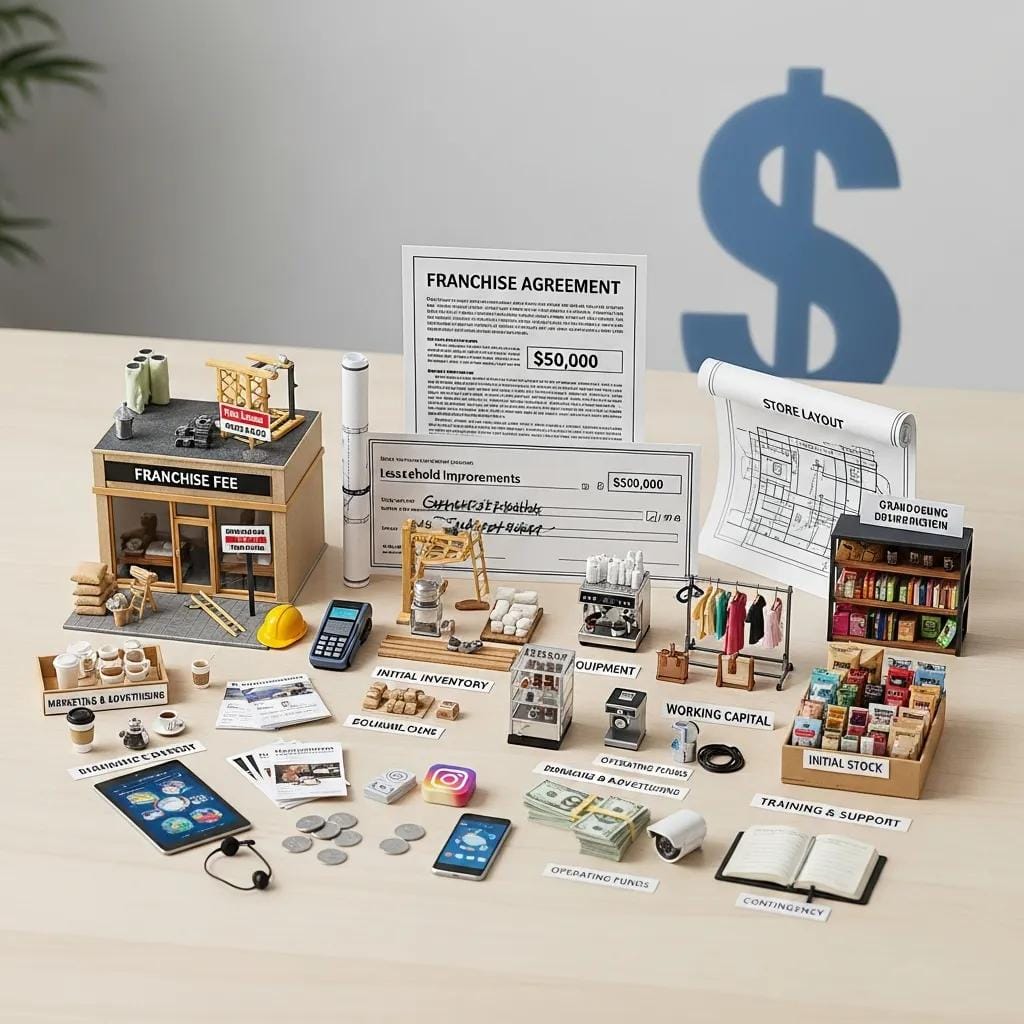
Investment levels vary by brand strength, store footprint, and inventory needs. Breaking costs into components makes it easier to see where capital is used and how profitability is affected. Typical cost drivers include the initial franchise fee, buildout and leasehold improvements, inventory, equipment, and working capital; ongoing expenses include royalties and advertising contributions. Understanding these elements helps you model breakeven timelines and the sensitivity of returns to sales volume. The table below clarifies major cost components, typical ranges, and their impact on profitability.
| Cost Component | Typical Range | Impact on Profitability |
|---|---|---|
| Initial franchise fee | $10,000 – $60,000 | Upfront expense that increases the initial cash required and affects amortization |
| Buildout and leasehold | $20,000 – $250,000+ | high fixed cost that raises the monthly overhead and extends the breakeven time |
| Inventory | $5,000 – $100,000 | Tied to margins and turnover, high inventory can tie up working capital |
| Working capital | $10,000 – $75,000 | Essential for covering slow months and launch expenses |
| Royalties & ad fees | 4% – 12% royalties; 1% – 4% ad fee | Ongoing charges that reduce gross margin and net profitability |
What Is the Typical Initial Investment Range for Retail Franchise Opportunities?
Many small‑to‑midsize retail concepts have initial investments in the neighborhood of $50,000 to $300,000, though specialty formats and high‑end storefronts can exceed that. Lower‑cost options — often mobile or e‑commerce‑first models — can start closer to $30,000–$75,000 because they avoid large leasehold and buildout expenses. Mid‑range concepts ($100,000–$300,000) typically include a storefront, inventory, and equipment; prime‑location builds can push beyond those ranges due to higher buildout and lease guarantees. Each range generally covers the franchise fee, buildout, initial inventory, equipment, and a working‑capital buffer.
Understanding these compositions helps you compare opportunities on an apples‑to‑apples basis and plan financing accordingly. Next, we explain how fees and operating costs affect profitability.
How Do Royalties, Advertising Fees, and Operating Costs Impact Profitability?
Royalties and advertising fees are ongoing obligations that reduce gross margin and can lengthen payback periods if sales miss targets. Royalties typically run about 4%–12% of gross sales, with advertising contributions around 1%–4%. Operating costs — rent, payroll, utilities, and shrinkage — are the other major drivers that compress net margin when fixed costs are high, or sales are low. For example, on $500,000 in annual sales, a 6% royalty and 2% ad fee reduce revenue by $40,000 before operating costs; high rent or payroll can push net margins below expectations if not modeled carefully. Running sensitivity analyses across different sales and cost scenarios helps estimate likely returns and downside risk.
Once you understand cost structure and sensitivity, you can focus on sectors that historically deliver stronger unit economics and steady demand.
Which Retail Franchise Opportunities Offer the Best Profit Potential in 2026?
Profit potential in 2026 favors segments with recurring demand, high‑margin services or products, and scalable or multi‑unit growth paths. Essential and everyday‑consumption categories — health & wellness retail, pet care and supplies, tech repair and accessories, fast‑casual retail with retail components, and home‑repair adjacent retail — show solid unit economics when paired with efficient operations. These sectors benefit from repeat customers, lower perishability, and add‑on services that raise lifetime customer value. The table below compares top industries and the attributes most likely to drive profit in 2026.
| Sector/Niche | Key Advantages | Profit drivers / Example metrics |
|---|---|---|
| Pet care & supplies | Recurring purchases and strong loyalty | Subscription add‑ons: 60–70% gross margins on select items |
| Health & wellness retail | Essential, repeat purchases | Membership programs; steady foot traffic |
| Tech repair & accessories | Service-heavy margins | High labor margins; recurring repairs and warranty sales |
| Fast-casual retail (convenience focus) | High throughput and repeat customers | Higher per‑ticket sales from combos and add‑ons |
| Home repair-related retail | High-ticket accessories and parts | Contractor partnerships and B2B channels |
What Are the Most Profitable Retail Franchise Sectors This Year?
In 2026, some of the more profitable sectors include pet care and supplies, health and wellness retail, tech repair and accessories, and fast‑casual formats that emphasize convenience and subscription options. These segments benefit from repeat purchases, margin-enhancing add‑ons, or service elements that raise per‑customer revenue. Profitability also improves where operations are standardized, and inventory management minimizes shrinkage and maximizes turnover. For investors, focusing on these categories increases the odds of favorable unit economics.
How Can Emerging Retail Franchise Niches Provide Unique Advantages?
Emerging niche franchises — like sustainable product retailers, specialized tech repair boutiques, or curated regional food shops — gain advantages from lighter direct competition, more targeted marketing, and higher customer loyalty that supports premium pricing. Niche positioning lets owners charge more for curated assortments or expertise that larger generalists can’t match. For example, a focused tech‑repair concept can monetize both repair services and higher‑margin accessory sales, lifting gross margins and customer lifetime value. Investors who target niches with clear competitive moats often see faster customer acquisition and stronger retention.
How Does Business Builders Support Your Retail Franchise Ownership Journey?
Business Builders offers lead generation and brokerage services that match entrepreneurs with franchise opportunities through a structured pre‑screening and alignment process. We assess financial capacity, background fit, and geographic preferences to pair clients with franchisors whose models suit their goals and capital. Business Builders facilitates introductions, clarifies typical franchisor expectations, and helps prioritize opportunities that meet a buyer’s timeline and investment profile. Our advisory role complements — not replaces — your independent due diligence, accelerating the discovery and screening stages.
What Expert Guidance and Pre-Screening Services Does Business Builders Provide?
Business Builders conducts targeted pre‑screening to evaluate financial readiness, experience alignment, and geographic suitability, resulting in a focused shortlist of franchise opportunities aligned with client priorities. Services include an initial qualification review, alignment meetings, and guidance on documents and financial projections to request from franchisors. This approach cuts time spent pursuing poor fits and surfaces franchises with realistic unit economics for the client’s market and capital profile. For example, matching a candidate who has adequate working capital to a specialty retail concept reduces the risk of undercapitalization during ramp‑up.
These services streamline the selection process and prepare entrepreneurs for efficient due diligence and lender conversations. To take the next step, Business Builders invites qualified candidates to schedule a screening consultation. Interested entrepreneurs can contact Support@startabusinesstoday.co or call 866-578-0322 to request an initial discussion and screening form.
How Have Entrepreneurs Achieved Success Through Business Builders?
Entrepreneurs who work with Business Builders often report faster matches and clearer expectations about required capital and franchisor support, leading to more informed investment decisions and quicker openings. Common outcomes include identifying franchises that align with both lifestyle and financial goals, receiving actionable feedback on FDD items to verify, and receiving a prioritized list of franchisors to contact. While results depend on individual circumstances, Business Builders’ pre‑screening reduces time spent on irrelevant leads and helps clients focus on viable options — moving buyers from initial interest to signed agreements with fewer surprises at onboarding.
These examples show how a focused intermediary can add value while keeping decision‑making in the buyer’s hands. If you’d like guidance, reach out via Support@startabusinesstoday.co or 866-578-0322 to begin the screening process and discuss retail franchise opportunities in your target area (Tampa, Florida, and beyond).
Frequently Asked Questions
What are the key benefits of investing in a retail franchise compared to starting an independent business?
Investing in a retail franchise gives you a tested business model, brand recognition, and operational support that reduces many startup risks. Franchisees receive training, marketing help, and supply‑chain advantages that independents often lack. Franchises also tend to have lender familiarity, a network of peers for advice, and playbooks for common challenges — all of which can speed the path to profitability.
How can I assess the financial health of a franchise opportunity?
Start with the Franchise Disclosure Document (FDD) and focus on items that reveal financial commitments and performance: Item 7 (initial investment), Item 19 (financial performance representations), and Item 20 (franchisee obligations). Speak with current franchisees for real‑world results, review historical unit performance, and model ongoing costs like royalties and ad fees. Combining FDD data with franchisee interviews and a market assessment gives the clearest view of potential profitability.
What role does technology play in the success of retail franchises in 2026?
Technology is central to retail success in 2026. Franchisors are adopting omnichannel systems, inventory automation, and customer‑data platforms that streamline operations and improve repeat business. Strong tech stacks help franchises sell across channels, personalize marketing, and manage inventory more efficiently — all of which boost revenue and reduce operating friction.
What are the common pitfalls to avoid when selecting a retail franchise?
Avoid a few recurring mistakes: don’t skip rigorous market research, don’t underestimate working capital needs, and don’t gloss over the FDD. Beware of promises of unrealistically fast returns or opaque financial disclosures. Most importantly, speak with multiple franchisees to understand day‑to‑day realities — their experiences will surface issues a sales pitch won’t.
How can I finance my retail franchise investment?
Financing options include franchisor financing programs or lender partnerships, Small Business Administration (SBA) loans, personal savings, home equity loans, and investments from family or partners. Prepare a clear business plan and realistic financial projections to present to lenders; demonstrating an understanding of the franchise’s cash‑flow dynamics will improve your funding prospects.
What support can I expect from franchisors after opening my retail franchise?
Most franchisors provide ongoing support after opening: training for you and your staff, operational playbooks, marketing materials, and access to a network of other franchisees. You can expect regular guidance on best practices, promotional campaigns, and updates on industry trends — all designed to help you stay competitive and refine operations as you grow.
Conclusion
Investing in a retail franchise in 2026 lets you leverage established brands and systems to reduce startup risk and accelerate revenue generation. Favorable market dynamics and stronger franchisor tools make many opportunities attractive for the right buyer. By matching your goals to the right category, conducting structured due diligence, and carefully planning financing, you can make informed choices that lead to long‑term success. Ready to take the next step? Explore our resources and connect with our advisors to begin.